Preface
The question behind “When Aluminum-Foil Containers Work” looks like a choice of appearance or material, but packaging performance also depends on the food, geometry, time-temperature history and handling. This article explains the visible problem first, then the material and structural mechanism, and finally the limits of what can be inferred without a product-specific test.
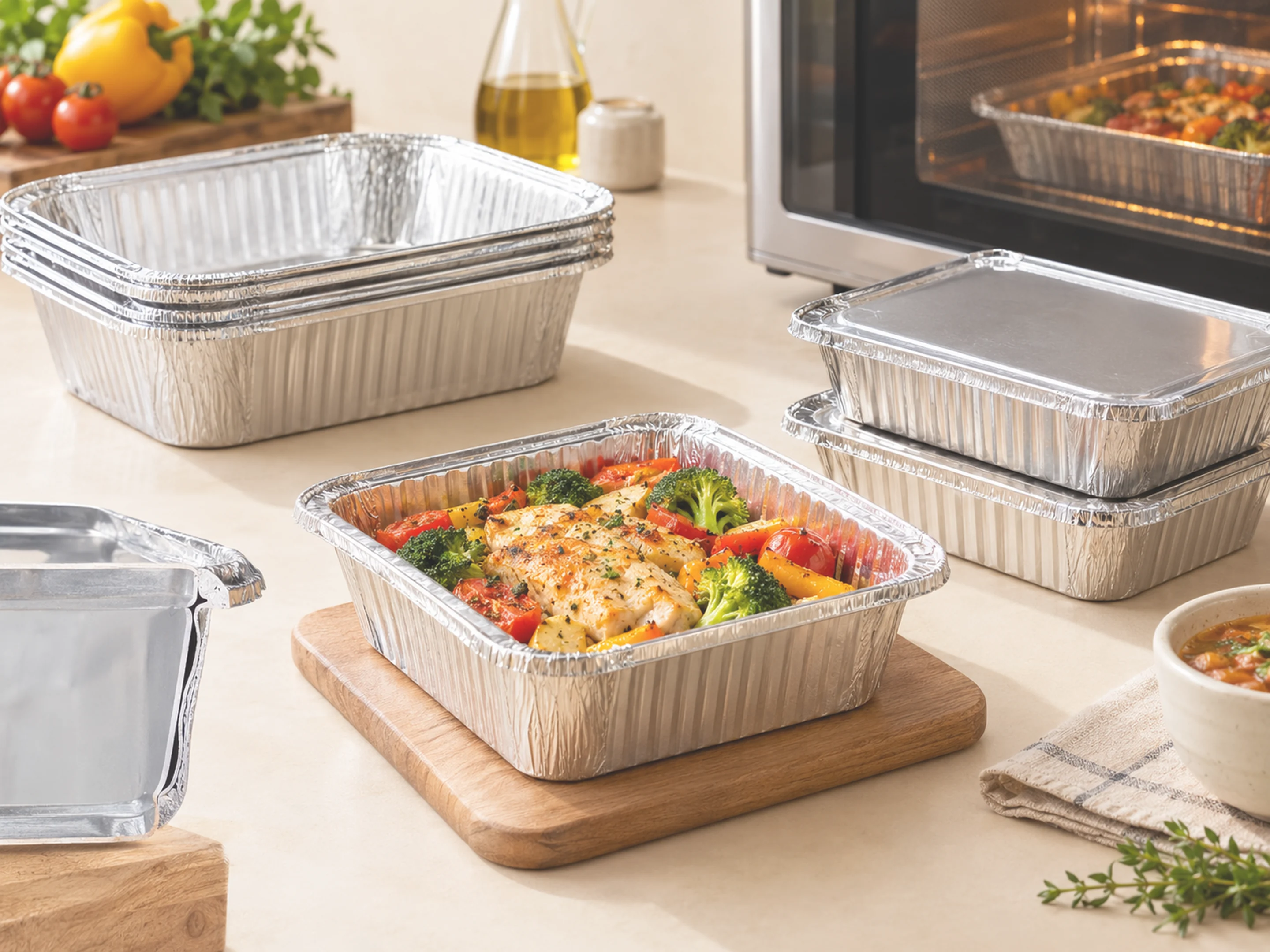
Aluminum foil containers benefit from the metal’s thermal conductivity, opacity and resistance to water vapor and oxygen. They can suit baking, prepared foods and some oven applications. Fast heat transfer also means the base and rim approach equipment temperature quickly, so handling requires support and burn awareness. Thin foil is vulnerable at folds, corners and edges, where pressure can create pinholes or tears.
Acid, salt, time and temperature affect the surface chemistry of aluminum. Tomato, vinegar, pickled foods and salty sauces should not be judged by the phrase “metal container” alone. Some products use a coating or a particular structure, but the conclusion must remain tied to the product and food conditions. Aluminum also reflects microwave energy. An ovenable foil tray is therefore not automatically suitable for a microwave, especially when edges are close to the cavity wall.
A common mistake is placing foil on a direct flame or assuming strong barrier properties automatically extend every food’s shelf life. Heating method, equipment instructions, food acidity and contact time must be specified. Inspect folds, edges, coating continuity and lid fit, then test the actual food under chilled, oven or delivery conditions.
References: