Preface
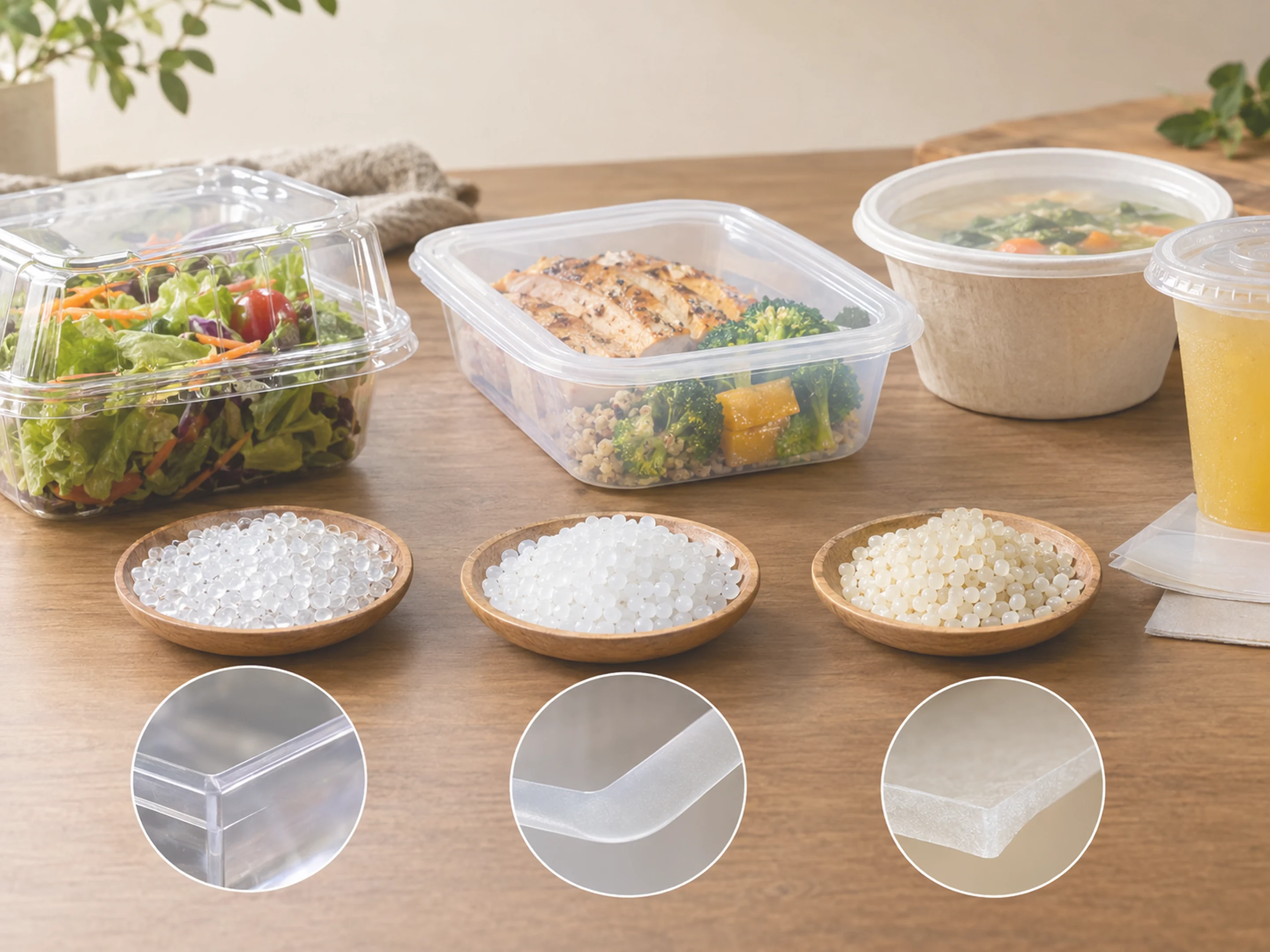
PP, PET and PLA are often treated as three simple material labels, yet the finished result also depends on crystallinity, wall thickness, forming direction, lid design and food temperature. This guide compares the polymers first, then explains which heat and end-of-life claims cannot be inferred from a resin name alone.
Three words are often mixed together when people compare packaging: stiffness, clarity and heat resistance. They are different properties. A pack can be very clear but unsuitable for high heat, or opaque but useful for reheating. Food-contact suitability also depends on the formulation, additives, food type and contact time.
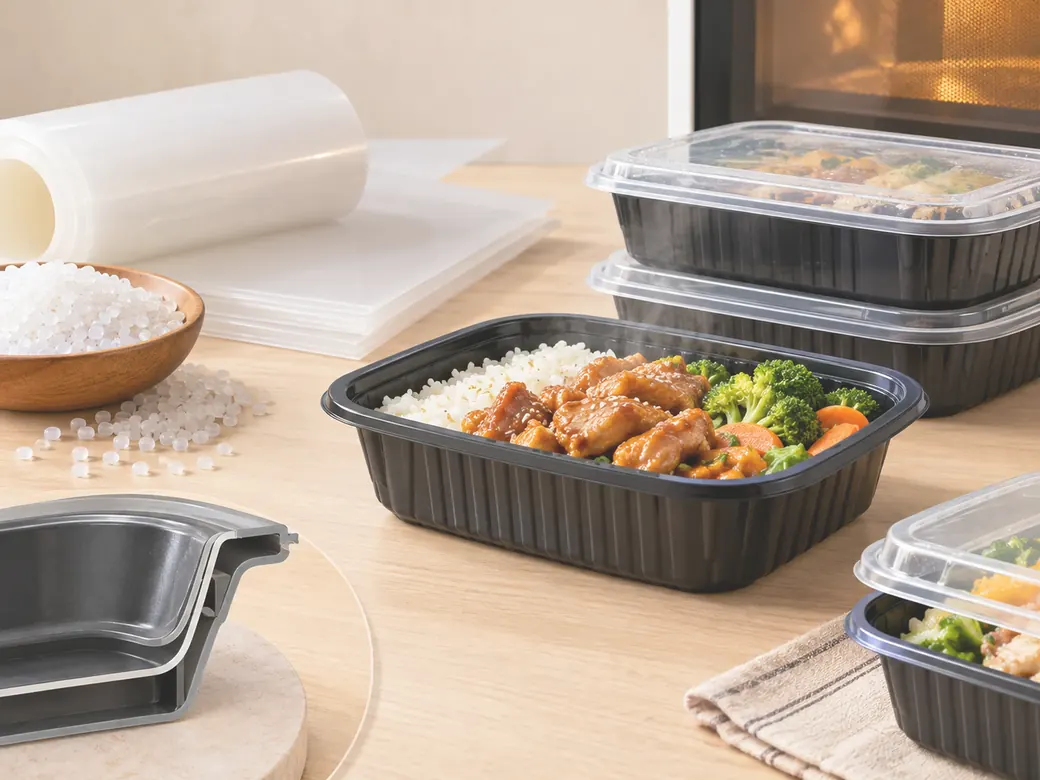
PP (polypropylene) is semicrystalline. Some chains form ordered regions that help the part retain its shape, while the same structure can give the material a milky or translucent appearance. Its low density and useful heat performance explain its presence in hot-meal containers, microwave-reheat packs and lids. The number 5 resin code is only an identification code; it is not a universal microwave rating. Thin walls, deep cavities, snap lids and hinged lids can respond differently at the same temperature.
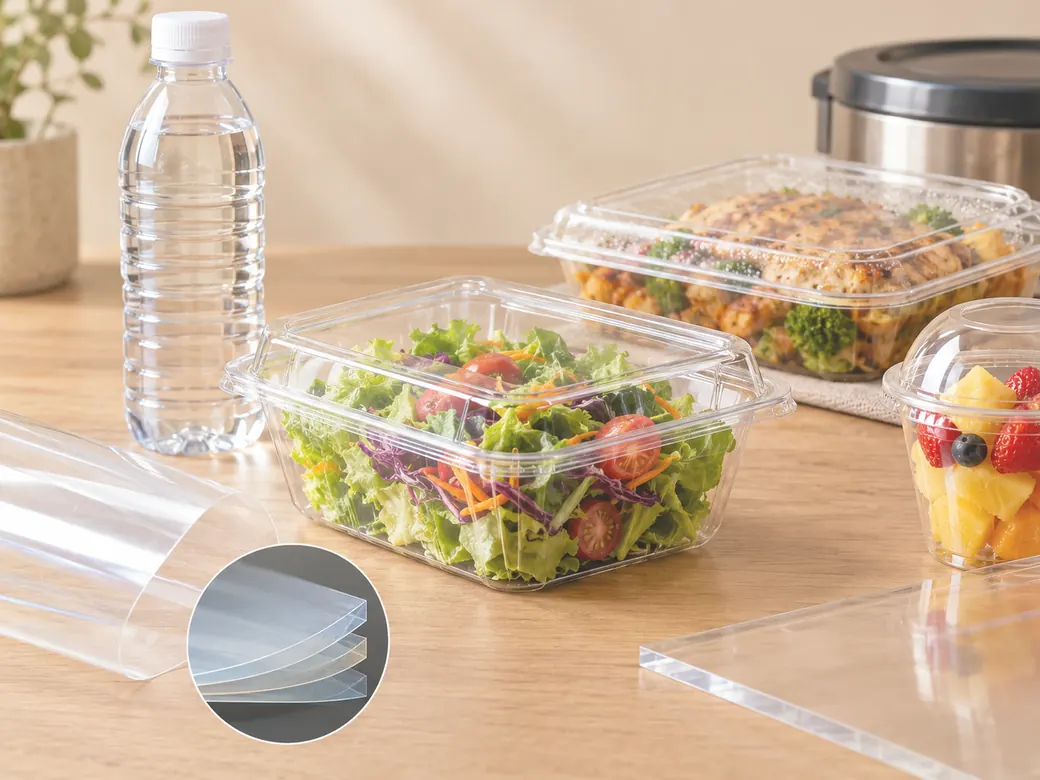
PET (polyethylene terephthalate) can be highly clear when processed in an amorphous state, which is useful for cold drinks, salads, fruit and desserts. Its barrier and display value are strong, but an ordinary clear APET container is not the same product as a crystallized CPET tray. Crystallinity changes optical behavior, stiffness and heat distortion. Two products marked PET should not be assumed to share oven, hot-fill or microwave limits.
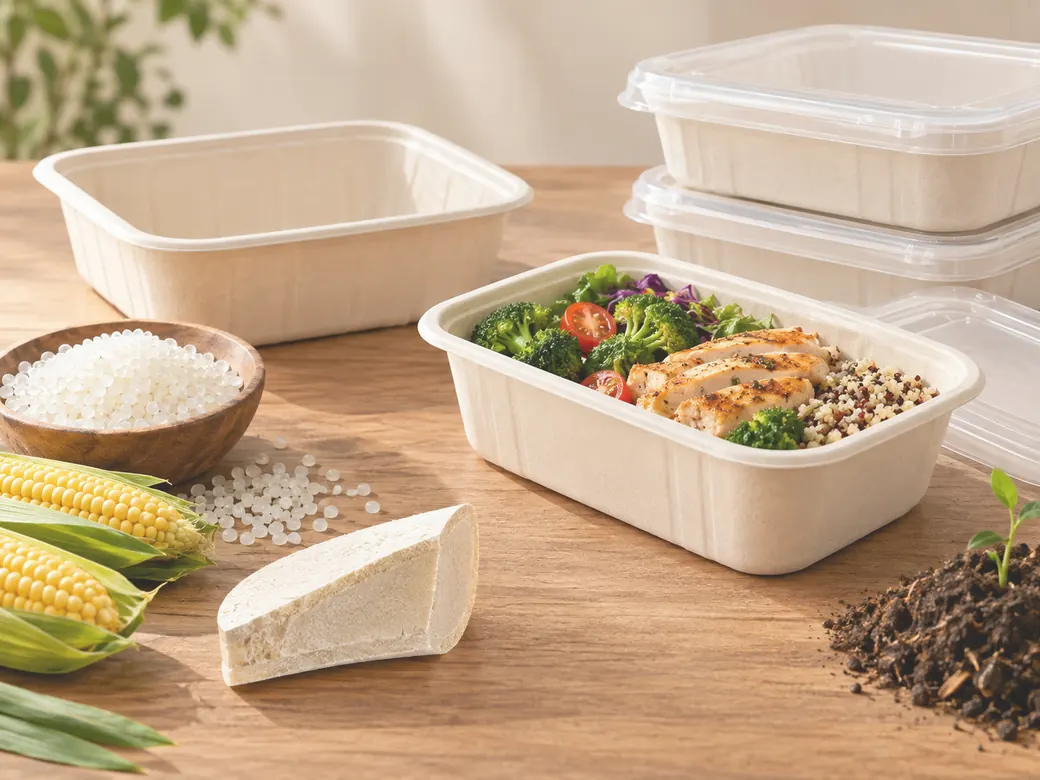
PLA (polylactic acid) is often made from bio-based feedstocks such as corn or sugarcane. “Bio-based” describes the source of carbon; “compostable” describes a disposal route, so the terms are not interchangeable. Unmodified or low-crystallinity PLA is commonly used for chilled food, room-temperature desserts and short display periods. Some high-heat grades gain performance through crystallization and annealing, but the result remains dependent on the formulation, forming process and available composting infrastructure.
Why a resin name is not a temperature rating
Heat performance includes several questions: whether a part softens briefly, whether it creeps under load over time, and whether food-contact requirements remain satisfied under the intended conditions. Glass-transition temperature, melting temperature, heat-deflection temperature and a practical use limit are not synonyms. NatureWorks, for example, reports high-heat PLA results for a defined grade and ASTM D648 specimens; that information should not be copied as an oven rating for every PLA container. Wall thickness, crystallization, closure and load all matter.
A practical way to judge a pack
For a chilled salad, start with clarity, condensation and closure. For a hot meal, look at food temperature, reheat time, venting and base support. For a disposable cold-food event pack made from PLA, check whether an industrial composting collection route actually exists in the region. Appearance and touch are useful clues, but they are not a complete technical conclusion.
References:
[1] FDA — Food Types & Conditions of Use for Food Contact Substances — https://www.fda.gov/food/packaging-food-contact-substances-fcs/food-types-conditions-use-food-contact-substances [2] European Commission — Food Contact Materials — https://food.ec.europa.eu/food-safety/chemical-safety/food-contact-materials_en [3] US EPA — Frequently Asked Questions about Plastic Recycling and Composting — https://www.epa.gov/trash-free-waters/frequently-asked-questions-about-plastic-recycling-and-composting [4] Agarwal et al. — Food Packaging Materials with Special Reference to Biopolymers-Properties and Applications — https://pmc.ncbi.nlm.nih.gov/articles/PMC9389508/