Preface
Clear packaging lets people see color, layers and apparent freshness, but clarity does not automatically mean higher heat resistance, barrier performance or shelf life. This guide uses PET structure to explain why a fruit box and a heatable tray need different designs.
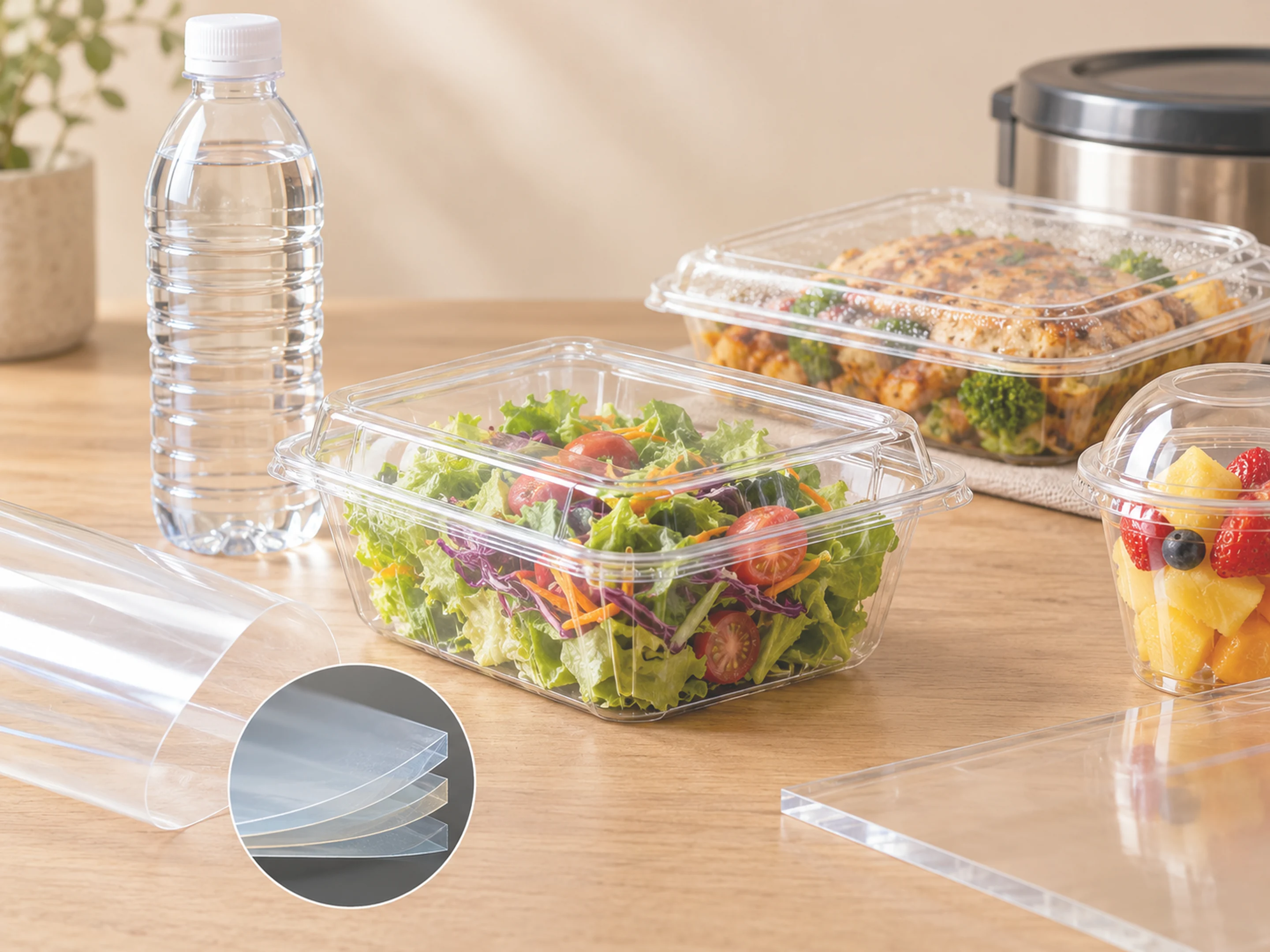
Clarity is related to how light scatters in a material. In amorphous PET, the chains are less ordered, so light is less likely to be repeatedly scattered by large crystalline regions. Cooling rate, stretching orientation, wall thickness and additives can all change the appearance; clarity is not determined by a resin name alone.
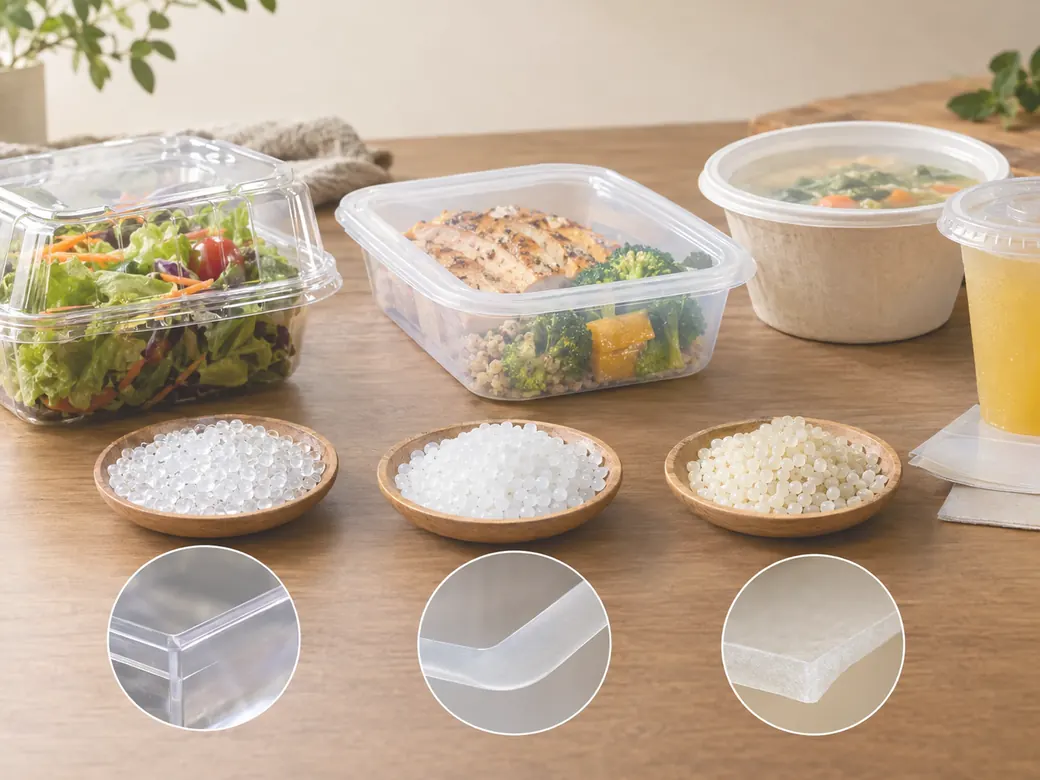
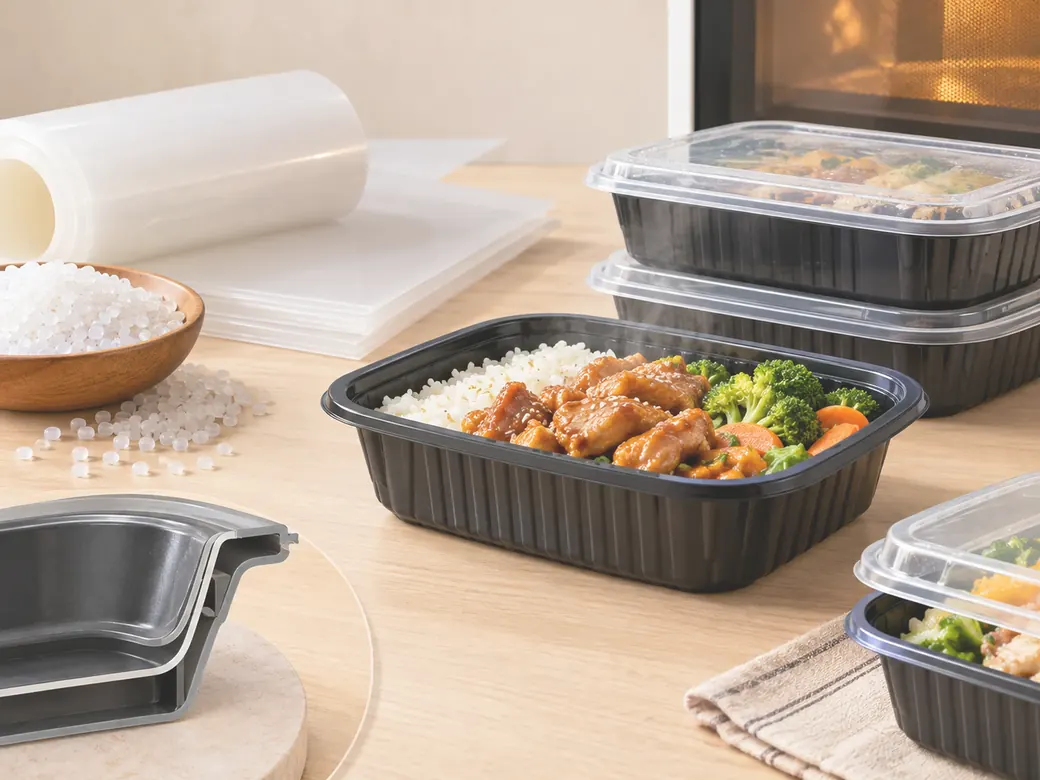
APET usually refers to PET sheet or a finished part kept largely amorphous. It is useful for chilled display, salads, desserts and fruit because it combines visibility with useful stiffness and barrier behavior. CPET is crystallized, so it may look opaque or translucent, but its heat shape stability is higher and it is often used for trays that face oven or high-temperature reheating conditions. The practical limit still depends on grade, thickness, lid and appliance.
Condensation is another issue for clear packs. When warm food enters a chilled environment, water vapor can condense on the lid and create haze. That is normally a temperature and moisture phenomenon, not evidence that the material has decomposed. Leafy produce, desserts and fruit also respond to light, respiration and surface water, so display and shelf-life goals may conflict.
Common errors include treating clarity as a barrier rating, treating CPET as a universal PET heat label, and assuming small scratches cannot affect presentation. A better choice considers food temperature, light, display time, drops and closure together. For a clear chilled pack, observe haze, droplets, opening force and stacking after refrigeration. For a heatable tray, evaluate thermal shock and deformation on the actual appliance.
References: [1] Agarwal et al. — Food Packaging Materials — https://pmc.ncbi.nlm.nih.gov/articles/PMC9389508/; [2] Faerch — CPET Food Packaging Material — https://www.faerch.com/en/food-packaging/materials-and-technologies/cpet; [3] FDA — Food Types & Conditions of Use — https://www.fda.gov/food/packaging-food-contact-substances-fcs/food-types-conditions-use-food-contact-substances