Preface
“Both are PET” does not mean two packs are interchangeable. This article explains APET and CPET through amorphous structure, crystallinity, forming and use conditions.
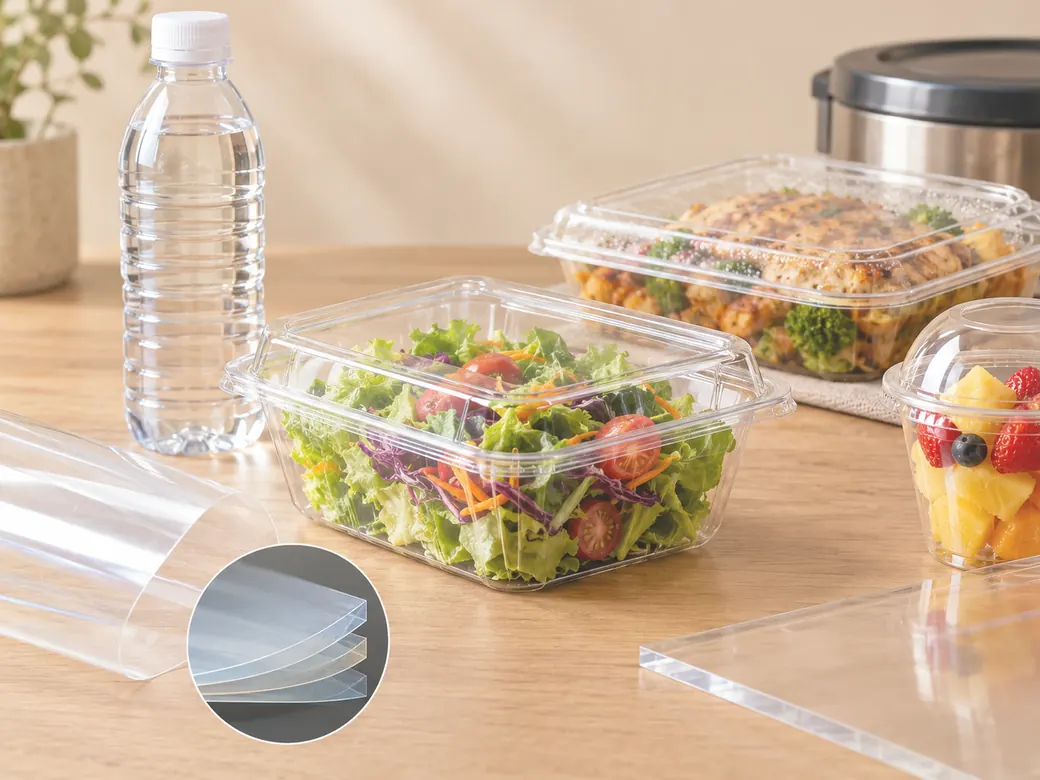
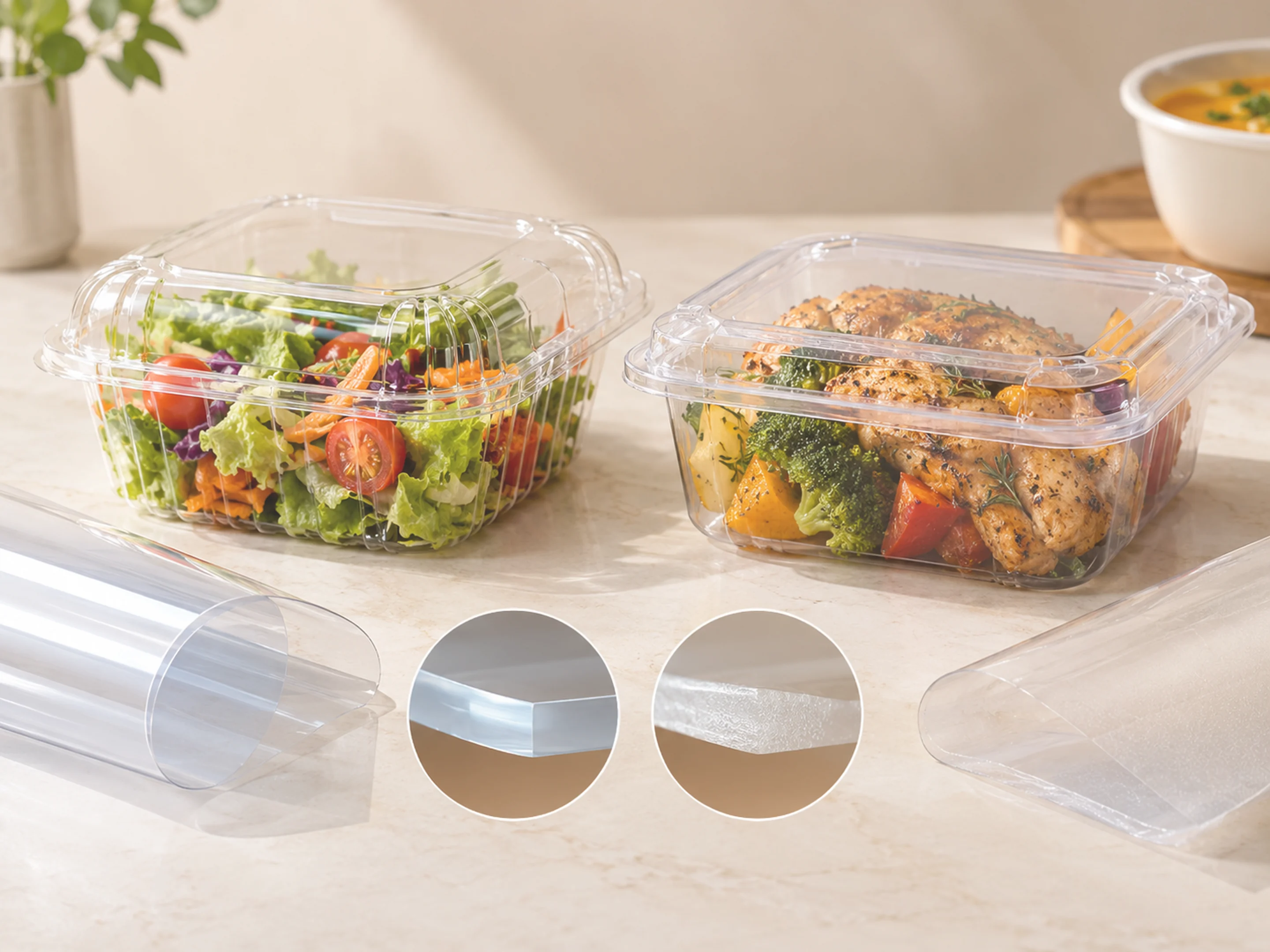
The key difference between APET and CPET is crystallinity. APET is kept largely amorphous so less light is scattered and clear display is possible. CPET gains crystallinity through forming and heat treatment, trading some clarity for stronger heat shape stability. Crystalline regions restrict chain movement, so two PET products can have different heat boundaries.
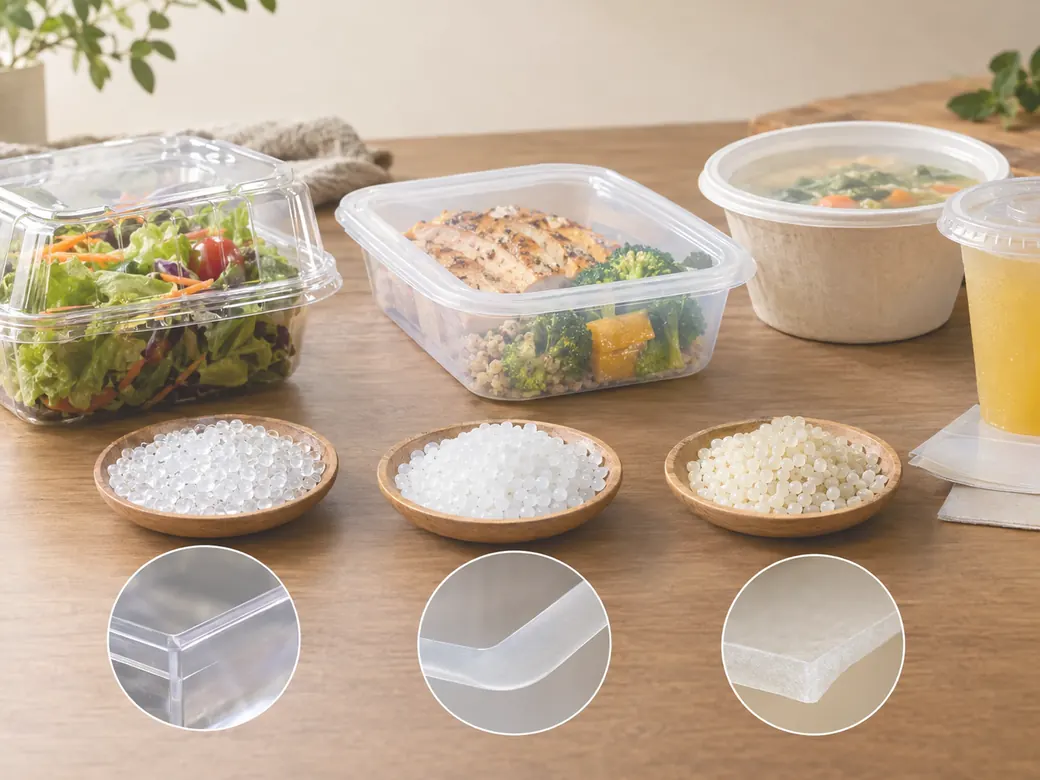
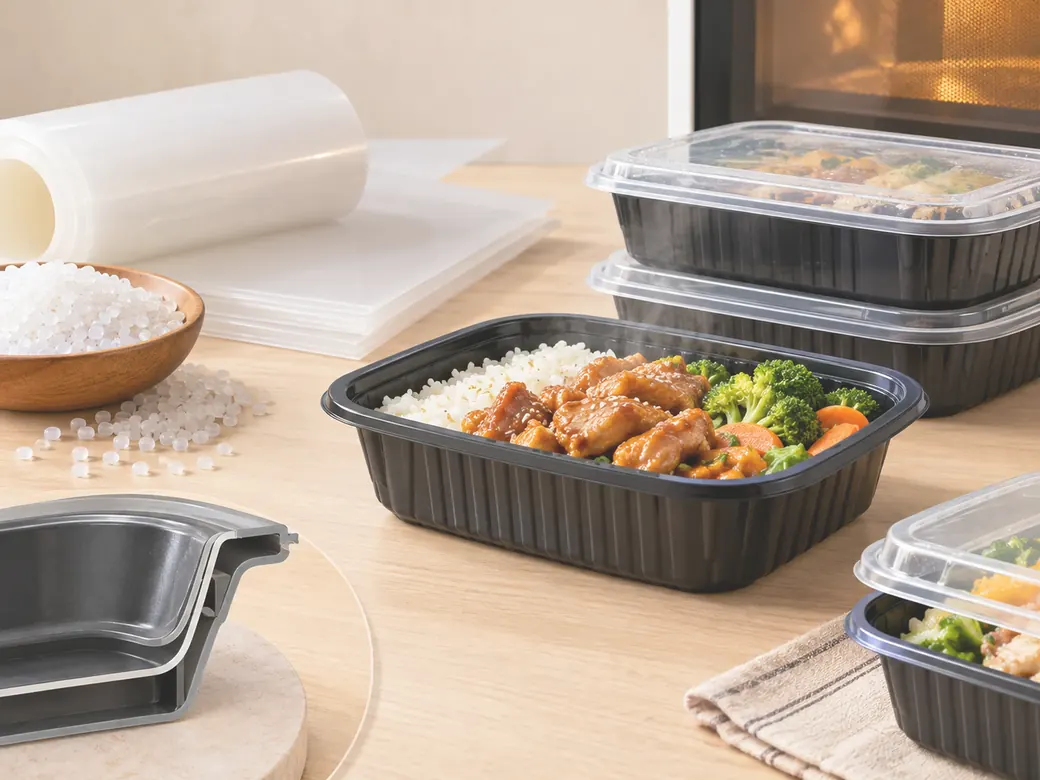
A clear chilled container may prioritize haze, appearance, drop resistance and closure for salads, fruit or desserts. A CPET tray may target frozen storage, oven heating or hot reheating and therefore prioritize thermal shock, base support and release from the mold. The word “may” matters: the model, lid and appliance still determine the actual use; a polymer family name is not a permission.
During thermoforming, sheet temperature, draw ratio and local wall thickness affect crystallinity and strength. A deep box may be thinned at the corners while the base carries the food load. The lid may use another material or structure, so the base, rim and lid do not necessarily deform together during a heat cycle.
Common errors include treating CPET as permission for any oven temperature or treating clear PET as automatically unsuitable for warm food. Start with the real frozen, chilled, reheated or baked path, then match the finished-product marking and validation conditions. Observe warpage, cracks, closure and release after the heat cycle instead of measuring one static temperature.
References: [1] Faerch — CPET Food Packaging Material — https://www.faerch.com/en/food-packaging/materials-and-technologies/cpet; [2] Agarwal et al. — Food Packaging Materials — https://pmc.ncbi.nlm.nih.gov/articles/PMC9389508/