Preface
The question behind “How Bakery and Dessert Boxes Protect Food” looks like a choice of appearance or material, but packaging performance also depends on the food, geometry, time-temperature history and handling. This article explains the visible problem first, then the material and structural mechanism, and finally the limits of what can be inferred without a product-specific test.
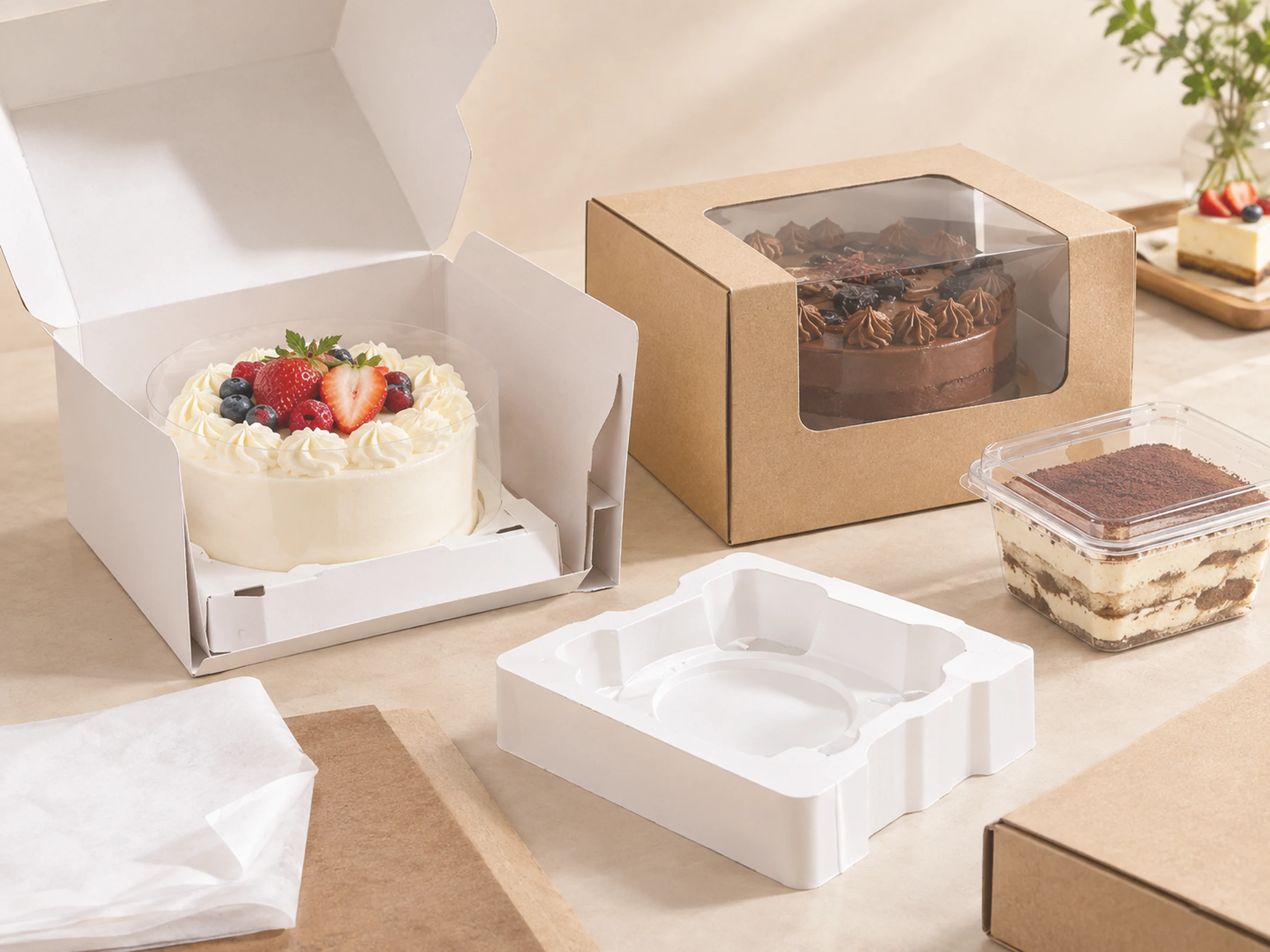
A cake box first needs the right clearance. If the top is too low, cream and decorations are compressed. If it is too high, the product can move during delivery, placing more demand on an insert or anti-slip feature. An insert can limit movement, separate multiple desserts and keep grease away from the main board, but its material and attachment also affect the overall structure.
Fats in bakery products can migrate through paper pores. Removing a chilled dessert from a refrigerator creates a temperature difference and condensation. Moisture can temporarily soften paperboard, while a window and adhesive joint may fog or lose stiffness. Board caliper, fold direction, corner locks and base support must be considered together. A box that feels rigid on the counter can still collapse when a damp bottom fold is lifted.
Dessert packaging also balances display and protection. A clear window shows the product but creates an opening and may make condensation more visible. The closure should open without touching the top of the cake. A transport check should include a carrier bag, horizontal placement and short tilts rather than one closure check at the counter.
Start with product height, mass, grease level, chilling time and delivery distance. Then inspect headspace, insert retention and cleanable contact surfaces. “Food-grade paperboard” alone does not prove grease resistance, condensation resistance or suitability for every dessert. References: