Preface
The question behind “Why Salad Containers Need Breathability” looks like a choice of appearance or material, but packaging performance also depends on the food, geometry, time-temperature history and handling. This article explains the visible problem first, then the material and structural mechanism, and finally the limits of what can be inferred without a product-specific test.
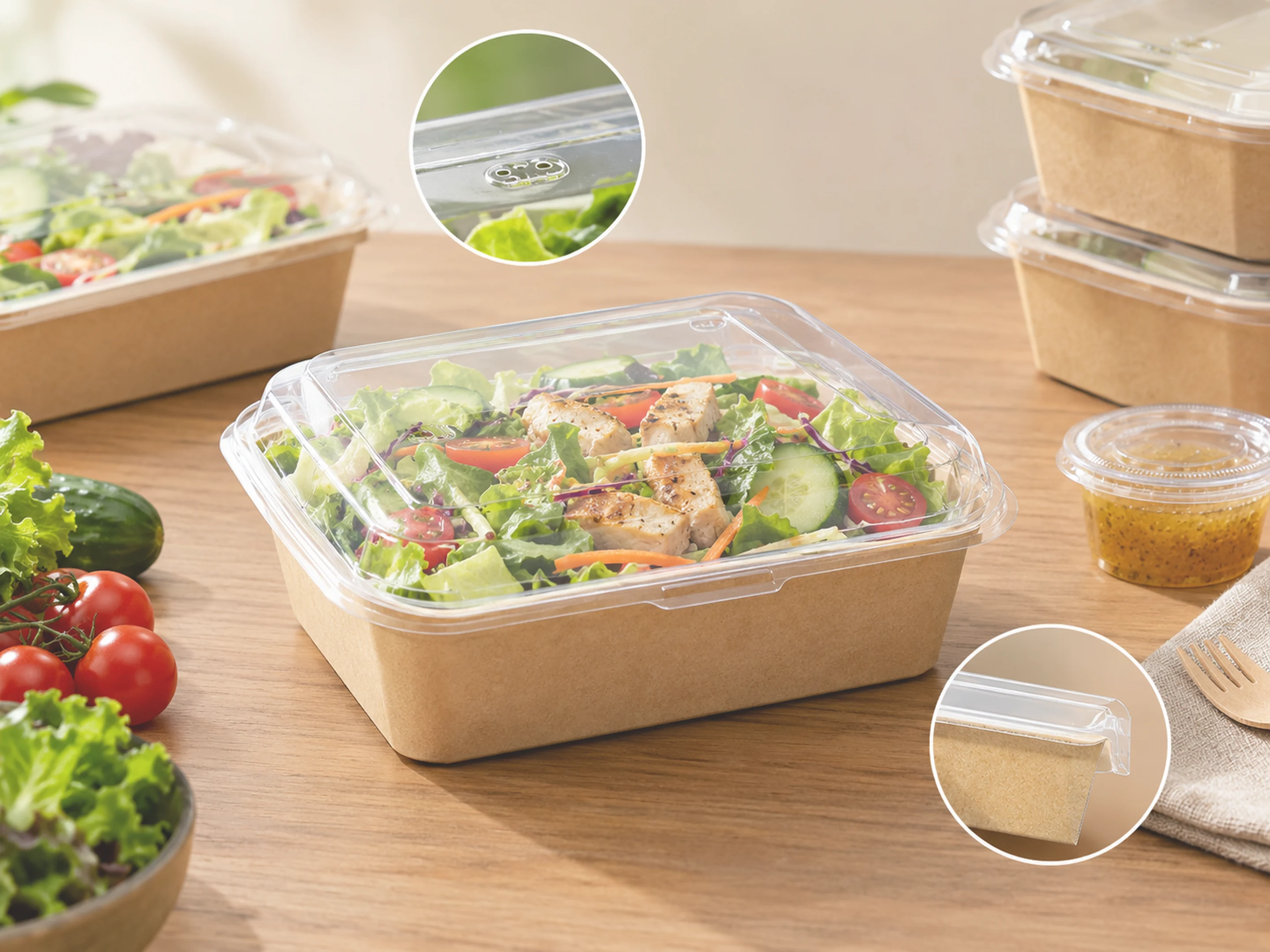
A salad is not a static food. Leafy greens, cut vegetables and fruit continue to respire after harvest, releasing carbon dioxide and water vapor. Temperature changes can condense that vapor on the lid. A fully closed pack may trap humidity and soften leaves; too much ventilation can increase water loss, admit odors or worsen leak risk during transport.
Ventilation is not simply “letting air in.” Hole position, area, membrane, fill level and cold-chain temperature control gas and moisture transfer together. A salad with dressing also needs liquid separation, often through a separate cup or compartment. Transparency improves display but makes condensation easier to see. Condensation is evidence of a temperature and moisture gradient, not by itself proof of spoilage.
A common mistake is treating leak control and breathability as opposites, or assuming a tighter lid always preserves freshness. Design should consider respiration rate, cutting, temperature and intended shelf life. A made-to-order salad delivered for a few hours is a different problem from a retail pack expected to remain in a case. FDA’s food-contact framework does not replace microbiological or cold-chain validation.
Observe the pack at its intended temperature. Record leaf dehydration, droplets on the lid, dressing movement, bottom leaks and opening odor. Do not use visible droplets as a safety verdict; food temperature control and hygiene remain separate controls. References: