Preface
The question behind “Takeaway Coffee Cups Are More Than Paper” looks like a choice of appearance or material, but packaging performance also depends on the food, geometry, time-temperature history and handling. This article explains the visible problem first, then the material and structural mechanism, and finally the limits of what can be inferred without a product-specific test.
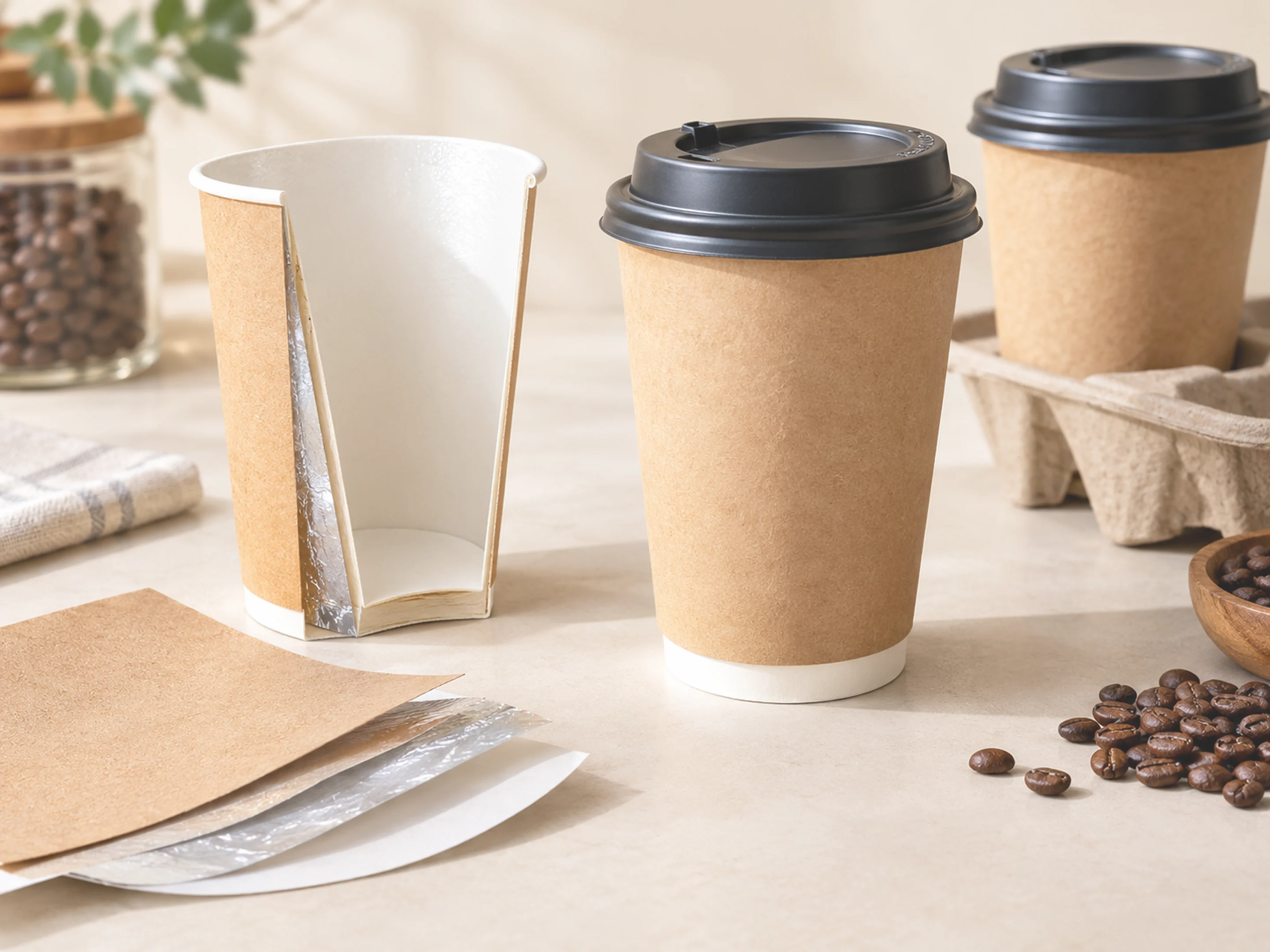
A paper coffee cup holds coffee because paper and an inner barrier form a composite construction. Paper is porous; without a liner, hot liquid can travel through the fiber network, soften the wall and wet the outside. PE, PLA or another coating keeps liquid on the inside, but coating continuity, thickness and adhesion still control performance.
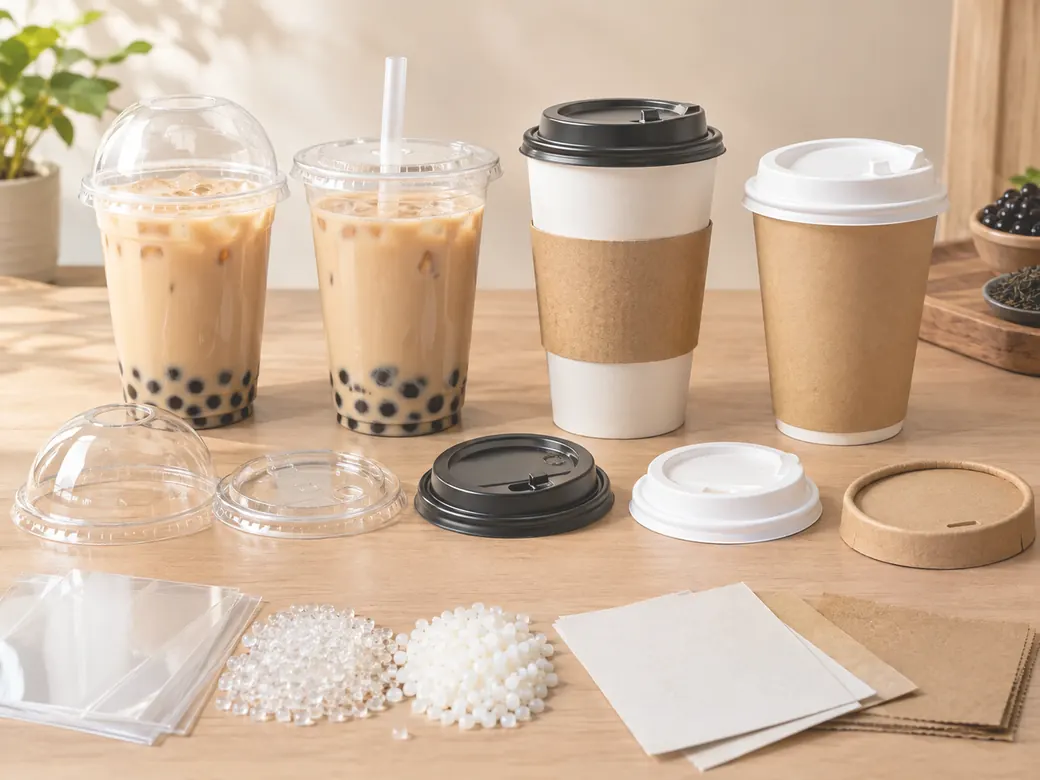
The rolled rim gives the mouth a smoother edge and provides a stable surface for a lid. The lid’s inner ring compresses the rim, while the sip opening controls flow and vapor release. The outside temperature depends on drink temperature, paper thickness, an air layer and whether a sleeve is used. A double-wall cup adds a second layer or air space; a sleeve addresses insulation and grip as a separate component.
Hot coffee creates more than a burn risk. It also creates spill risk during tilt and carrying. Coffee oils, syrup and condensation can change friction at the interfaces, while a bag can squeeze the cup from the side. A useful check includes standing, tilt, handling, lid fit and bagging rather than a boiling-water fill alone.
“Compostable paper cup” also needs to be unpacked. The paper, liner and lid may follow different material routes. Whether a facility accepts the combination depends on local rules. EPA’s explanation of compostable plastics cautions against extending industrial conditions to a home pile or the natural environment. References: