Preface
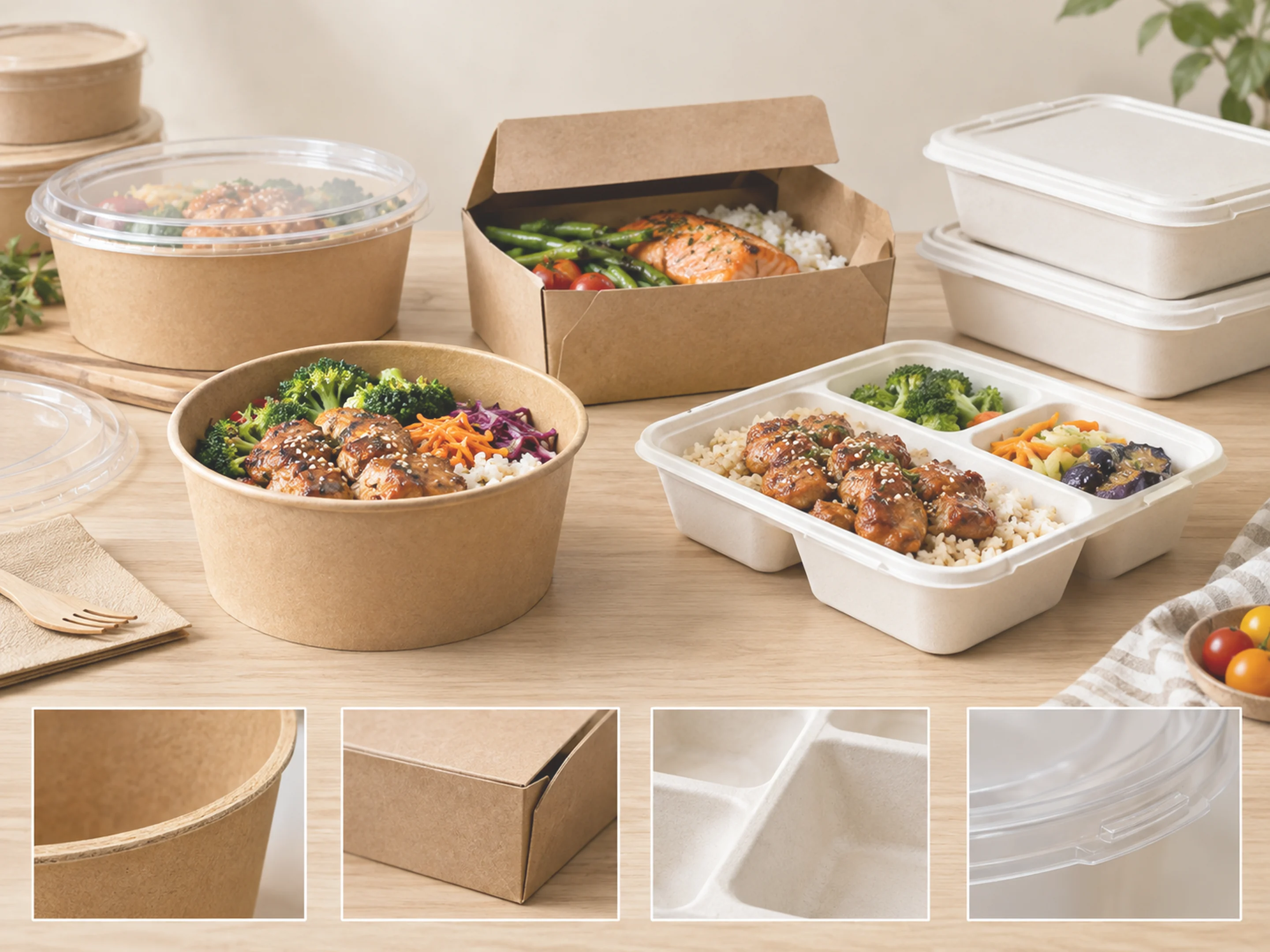
The same nominal volume behaves differently in a round bowl, square box and divided tray. This guide connects shape to load and user movement.
A round bowl’s continuous curve spreads side loads and suits soup, noodles and foods that need stirring. A square box uses shelf and carton area efficiently for rice and side dishes. A divided tray separates wet and dry or main and side foods, but the divider consumes volume and adds forming and cleaning complexity.
For soup and sauce, corner radius and base curvature affect liquid depth, spoon access and the liquid line during tilt. Square corners can become residue and cleaning zones. Divider walls also take load during stacking and closure. As the geometry becomes more complex, lid fit, demolding and dimensional control require more consistency.
Dividers do not automatically prevent flavor transfer. If a divider top is below the sauce level, tilt can still carry liquid across. If the lid has too little clearance, food can load the divider. For sauced meals, a separate sauce cup can sometimes control contact and cleaning better than a fixed divider.
Start with the service action: Does the food need shaking? Can a fork reach it? Does it need to stack or display layers? Use filled packs for carry, tilt, stack and opening checks instead of relying only on a drawing. No one shape wins every use; the right fit is the one that matches the food and workflow.
References: [1] Agarwal et al. — Food Packaging Materials — https://pmc.ncbi.nlm.nih.gov/articles/PMC9389508/; [2] FDA — Food Types & Conditions of Use — https://www.fda.gov/food/packaging-food-contact-substances-fcs/food-types-conditions-use-food-contact-substances