Preface
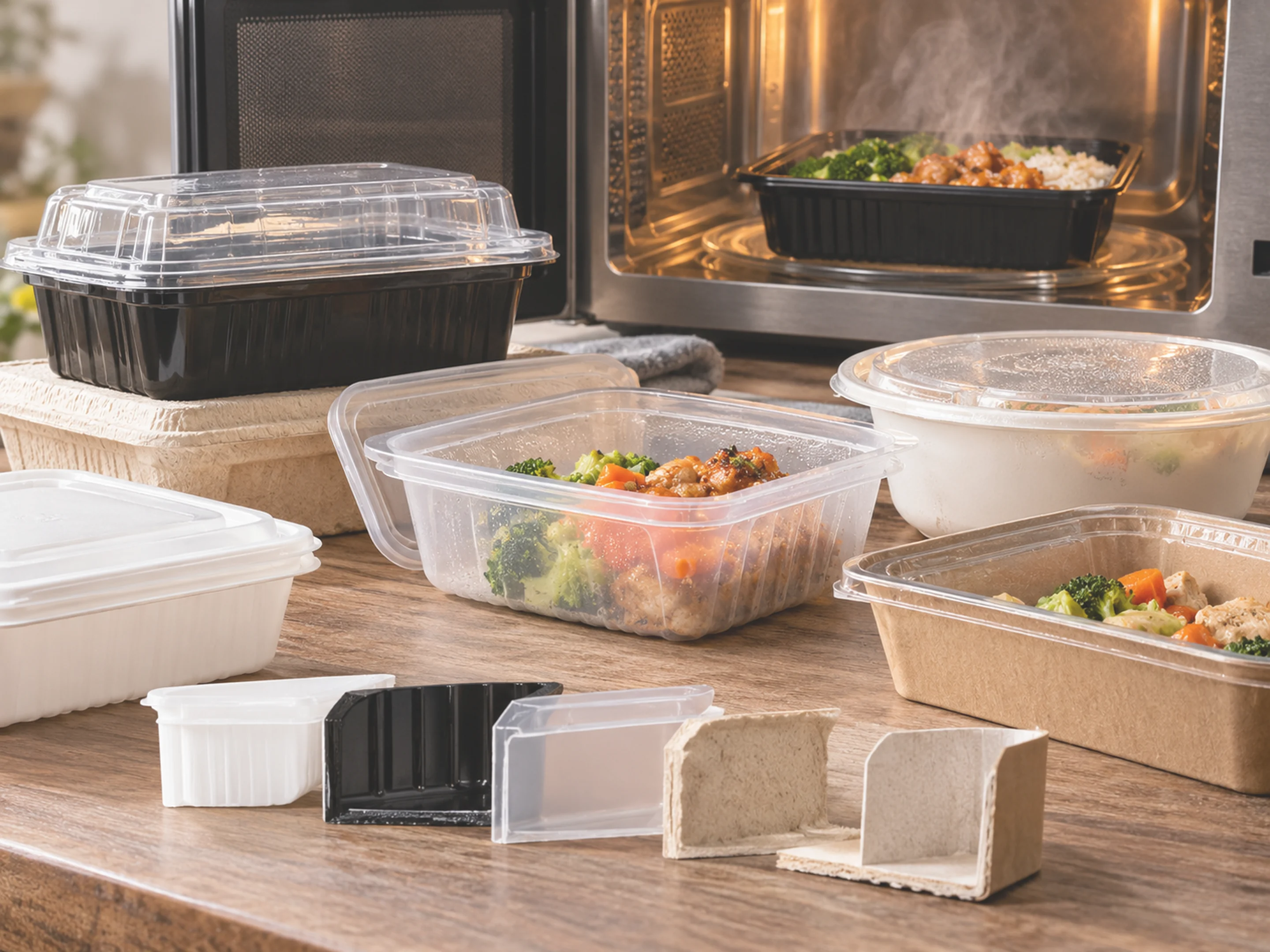
During microwave reheating, food and pack experience temperature, steam and pressure changes together. The same container can behave differently with different foods.
A microwave mainly heats polar molecules in the food; the pack is often heated by the food. A watery soup, rice dish or vegetable mix has a different temperature map from an oil-rich, sugary or unevenly hydrated food. Corners, edges and the dense center can reach different temperatures, so hot spots are possible.
The container must handle three linked issues: whether the material retains shape at the target temperature, whether the lid releases steam, and whether the seal and vent remain stable as pressure changes. PP is common in microwave packs, but grades, thickness and forming orientation vary. A clear PET box, a paper-plastic laminate and a pack with metallic decoration cannot be judged by appearance alone.
With a microwave-labeled product, remove lids, films, metal parts or decorations that are not intended for heating. Follow the venting instruction and avoid heating a fully sealed pack. High-sugar, high-fat or low-moisture food can develop hot spots faster than ordinary rice. Resting after heating matters because heat continues to move inside the food.
Common errors include reading “microwave suitable” as permission to heat an empty container, extending one short reheat to continuous high-power heating, and measuring only the base while ignoring food and lid steam. A useful check fixes power, time, fill, starting temperature and recipe, then records warpage, leakage, opening force and localized scorching.
References: [1] FDA — Food Types & Conditions of Use — https://www.fda.gov/food/packaging-food-contact-substances-fcs/food-types-conditions-use-food-contact-substances; [2] European Commission — Food Contact Materials — https://food.ec.europa.eu/food-safety/chemical-safety/food-contact-materials_en