Preface
Many people wash a takeaway container and use it again. Whether that is appropriate depends on the design, cleaning, heat and wear history, rather than appearance alone.
“Single use” describes a design and validation scope. A takeaway container may be designed for one filling, one delivery journey or one reheating event. The manufacturer may not have validated repeated washing, long storage and multiple heat cycles. Even when the resin can tolerate a temperature, a thin wall, snap feature or seal may fail first.
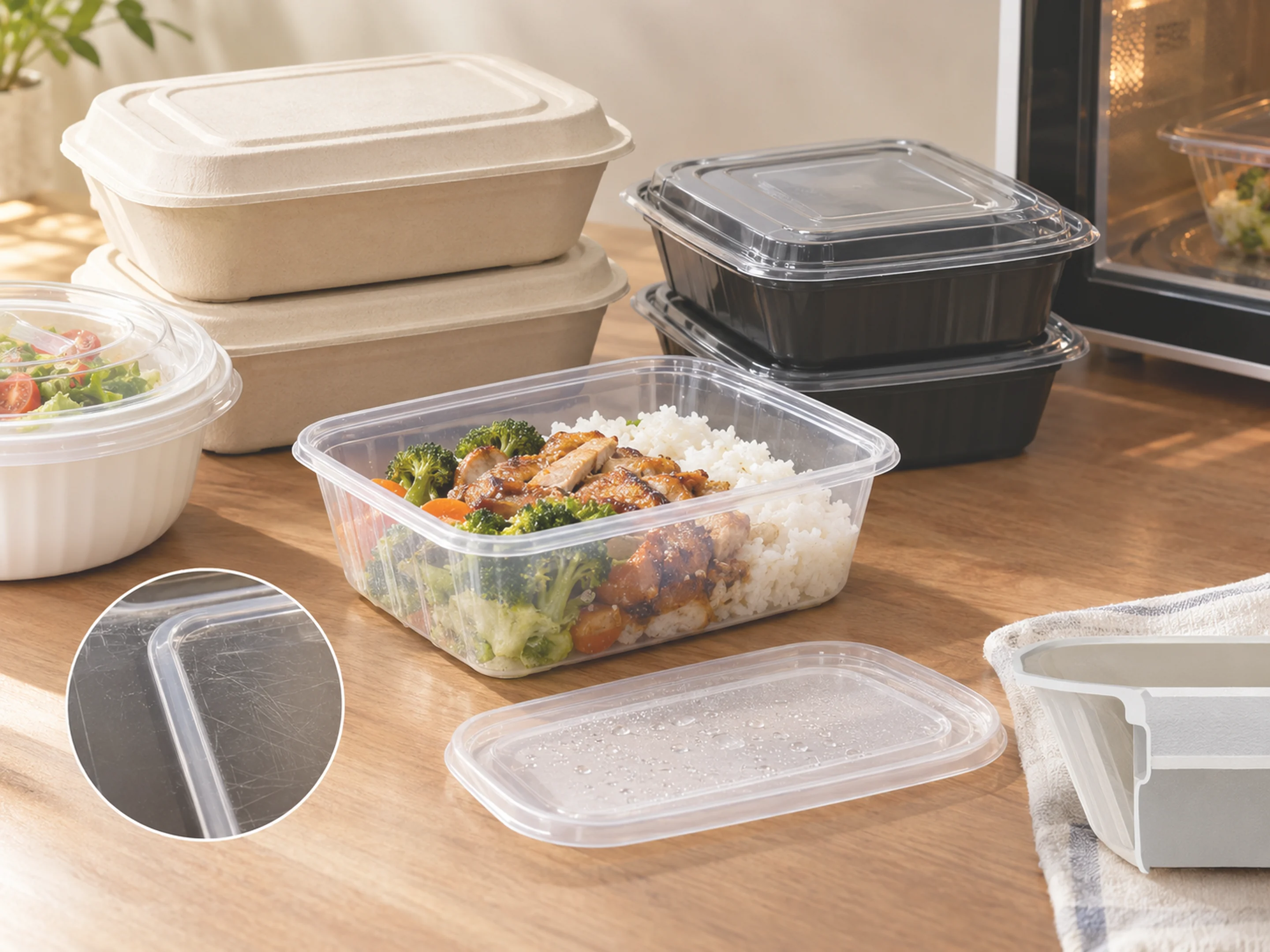
Cleaning introduces several changes. Hard brushes and utensils can create scratches that retain food residue and odor. Strong alkaline or oxidizing cleaners and high-temperature cycles can affect some surfaces, inks and sealing components. If wash water remains in a seam or crack, food residue can support microbial growth. Haze, brittleness and fine cracks in a clear part are useful signs that its surface or internal stresses have changed.
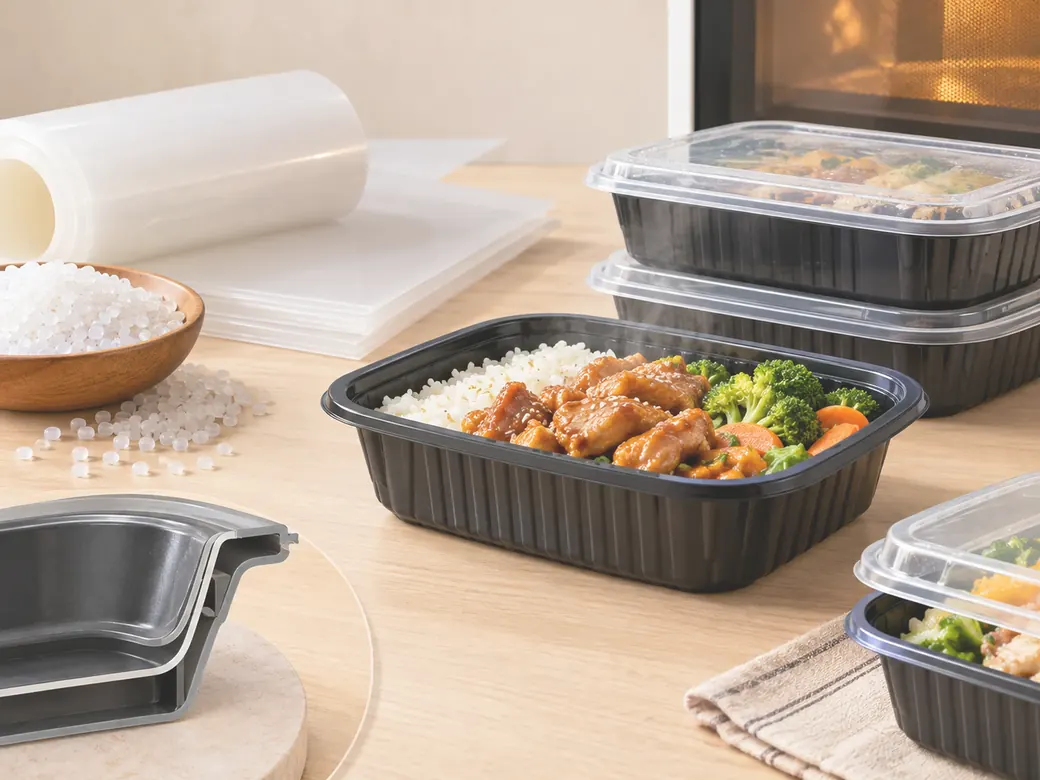
Heating adds another boundary. Microwave hot spots, fat and steam can expose the body and lid to uneven temperature and load. One cycle without visible distortion only describes that particular combination of food, power and time. It does not establish suitability for repeated reheating. Lids, films, labels and printed layers also need separate consideration; a number on the base is not a reuse rating.
A practical record includes purpose, number of cycles and conditions: dry food, soup or oily food; chilled, frozen, microwaved or dishwashed; intended number of uses; and changes in color, odor, cracks, warpage or closure. Occasional short-term reuse for cold food is a different exposure from repeated hot oily meals. When a pack is sold as single use without reuse instructions, it should be treated within that stated scope.
Two common errors are “it still looks fine, so it is safe” and “the recycling code tells me the reuse limit.” Food-contact evaluation also considers migration, food type and time-temperature conditions. For repeated use, choose an article designed and labeled for it, with cleaning, temperature and food limits that match the actual routine.
References: