Preface
A clear pack lets customers see the food, but it does not automatically improve shelf life or sales. Display value must be weighed against light, condensation, barrier and structural effects.
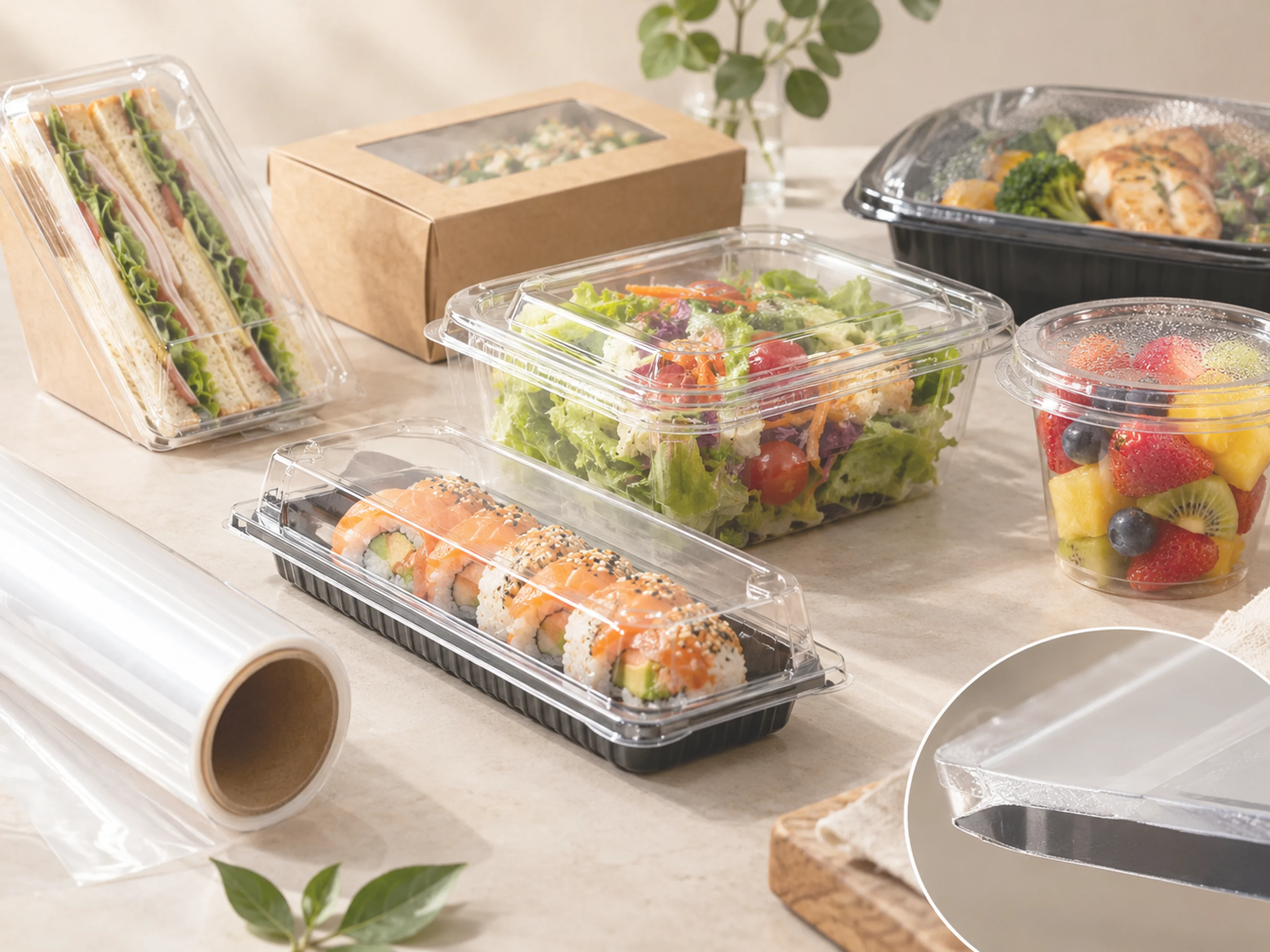
The visible benefit of clear packaging is obvious: customers can see color, layers and portion size, and a store can reduce opening to inspect contents. Display is only one part of the experience. Light can contribute to color change or oxidation in some foods. Temperature differences can create condensation that makes a product look stale even when the food condition has not changed in the same way.
Condensation occurs when water vapor reaches a surface below its dew point. Food moving from a cold case into a warm room may create droplets on the inside of a lid. A hot meal covered with a clear lid can condense steam in the same area. A tighter seal does not remove water vapor. Venting, absorbent features, cooling time and display temperature all affect the result.
Clarity also interacts with barrier and thickness. Clear PET can suit chilled display, but a transparent part cannot inherit CPET heat claims. Clear PLA needs its own heat and disposal assessment. A coating, color or multilayer that reduces clarity may improve light protection or barrier performance for a particular food.
Separate appearance from food loss when evaluating a pack. Track color, condensation area, temperature history, opening frequency and return reasons for the same food in clear and less-clear formats. A water droplet is not a direct spoilage test, while an attractive appearance does not remove the need for temperature control.
Two common mistakes are treating clarity as a safety grade and treating shopper preference as the complete environmental result. Weight, barrier, treatment route and food waste also matter. A useful conclusion states what the transparent window is meant to show, what light and temperature the food will see, and how condensation will be managed.
References: