Preface
A lid and a sealing film are different ways to close food. This guide compares rigid lids, snaps and films through interface, venting, opening and use.
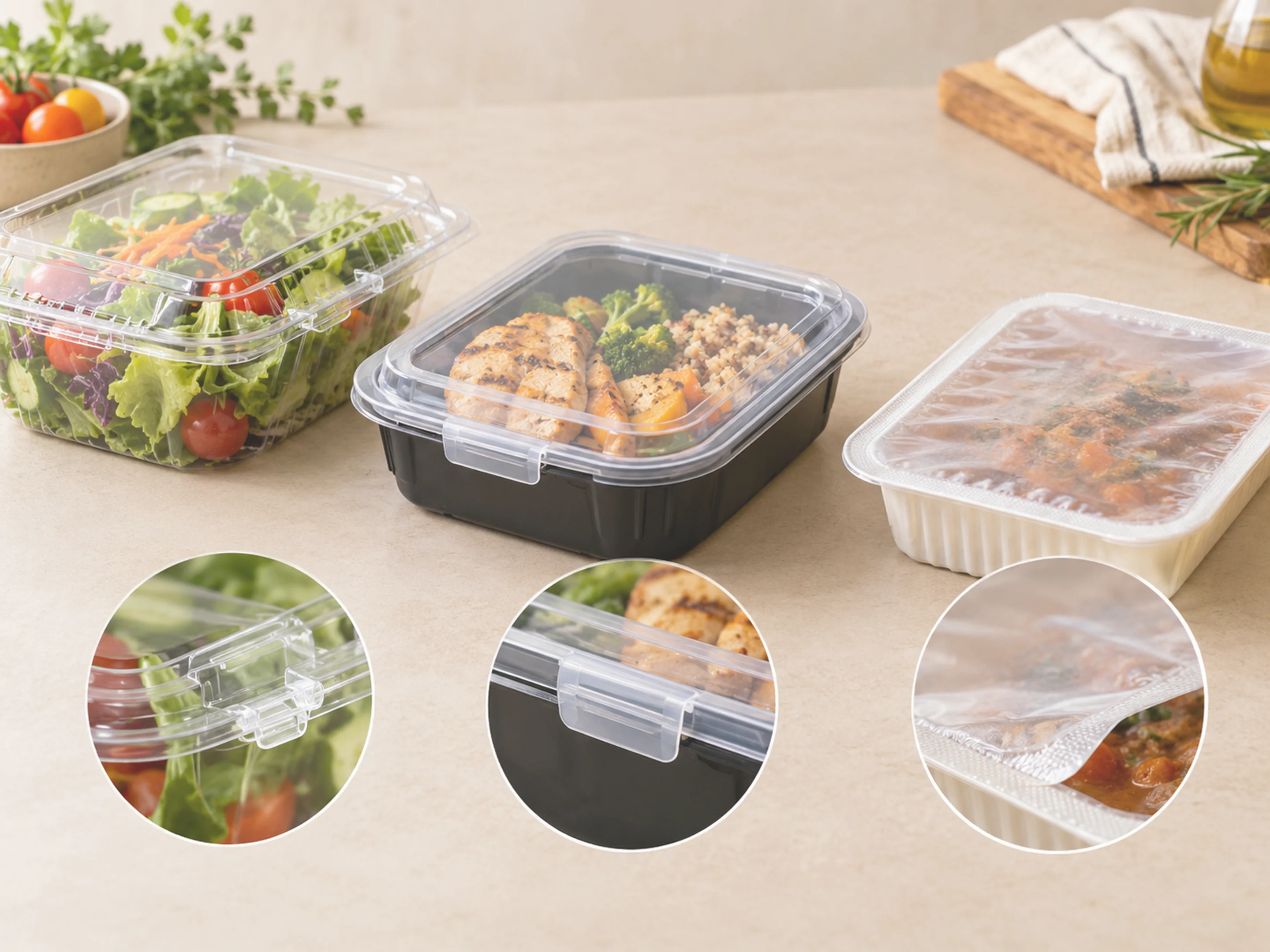
A clear rigid lid uses its shape, retention features and contact with the rim to keep food visible. It suits salads, desserts and display. A snap lid is designed for quick opening and closing in a store or at home; leak resistance depends on its flange, snaps and sealing line.
A sealing film bonds its sealant layer to the tray rim through heat, pressure and dwell time. The continuous seal suits prepared meals and foods that need tamper evidence. Peel force, tear initiation, vents and seal width affect the experience. A film that is too strong is hard to open; a weak or wrinkled film can create discontinuity or leak during transport.
Clarity, sealing and venting often involve trade-offs. A clear lid shows condensation and food condition, but insufficient clearance can crush the food. A film can lie flat yet need a secondary lid for protection and stacking. Hot-food reheating requires an intentional peel, vent or opening method; a chilled sealing condition cannot simply be reused for hot food.
Compare opening cycles, force, tilt, stacking, chilled storage and reheating. For films, record seal temperature, pressure, dwell time and material batch because the process window changes the result. Rank display, leak resistance, tamper evidence, reheating and service motion before choosing the structure.
Method scope matters: the public scope of ASTM F88/F88M-23 covers separation force and failure modes of flexible barrier seals, which informs seal-strength assessment. It is not a general leak test for rigid snap lids. This method reference does not establish that any product discussed here was tested or certified to the standard.
References: [1] ASTM International — F88/F88M-23, Seal Strength of Flexible Barrier Materials — https://store.astm.org/f0088_f0088m-23.html; [2] FDA — Food Types & Conditions of Use — https://www.fda.gov/food/packaging-food-contact-substances-fcs/food-types-conditions-use-food-contact-substances; [3] European Commission — Food Contact Materials — https://food.ec.europa.eu/food-safety/chemical-safety/food-contact-materials_en