Preface
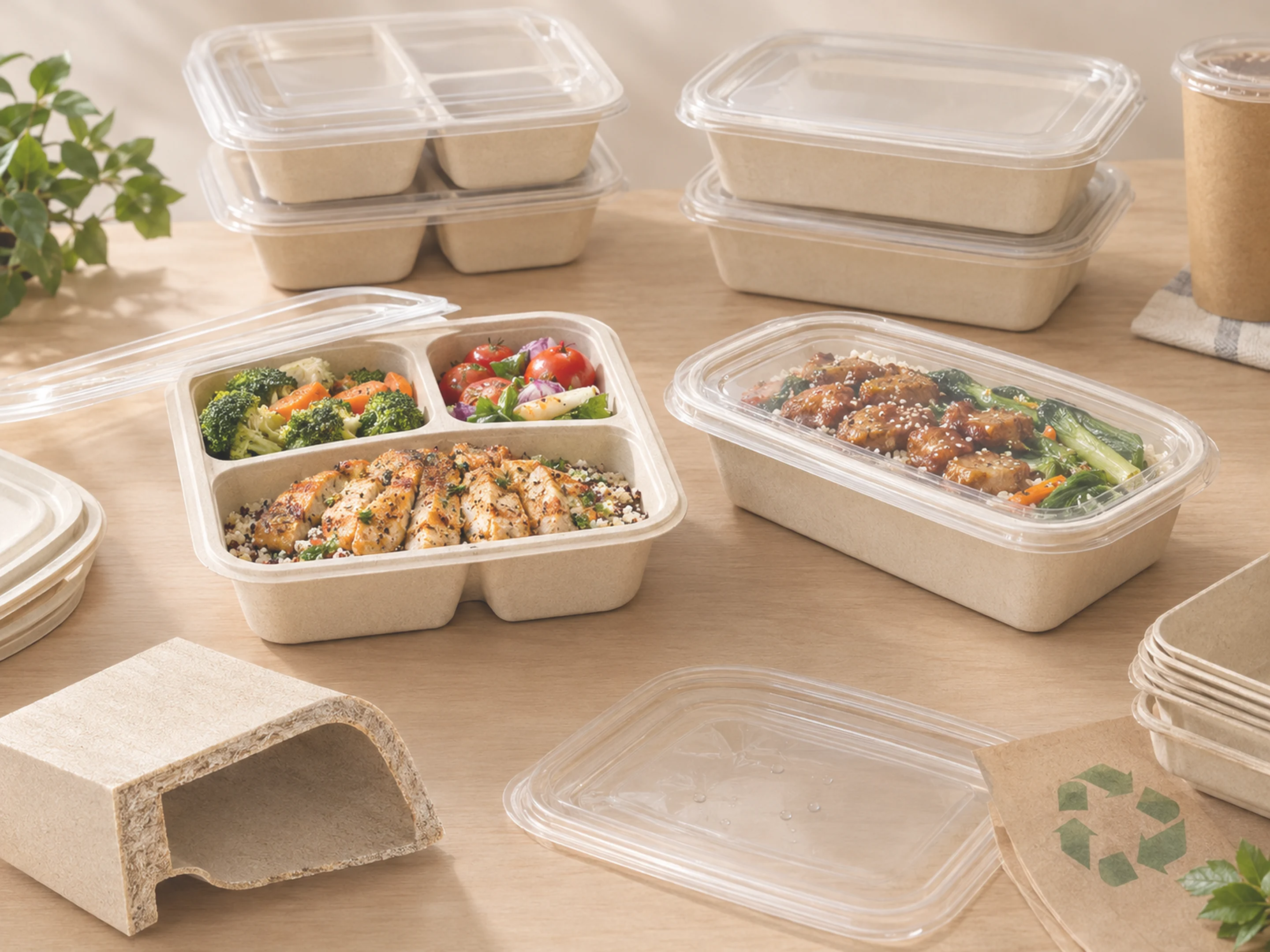
A compartment tray is more than a single box with a divider added. Divider height, wall thickness and closure design affect capacity, leakage and end-of-life handling.
The first value of compartments is separation. Sauce is less likely to reach a main dish, crisp vegetables can stay away from hot food, and small sides can remain in position during delivery. The divider also consumes floor and height, so total nominal volume does not mean every cell can be filled. The divider-to-base junction creates new thin zones and cleaning corners.
The closure determines how much separation is achieved. An outer snap lid can seal the perimeter while liquid still crosses a divider whose top is not independently compressed. A sealing film can follow multiple lanes, but it requires controlled flange flatness, film behavior and opening force. More compartments mean longer seal paths and more opportunities for tolerance or sealing defects.
Capacity should be compared as usable volume with the actual food shape. Bone-in foods, leafy vegetables, sauces and rice need different headspace. A high divider helps with flavor separation but limits large pieces. During delivery, the divider also changes load paths: it can support a lid in one direction and concentrate stress at a wall in another.
End-of-life cannot be inferred from the number of cells. Compartments may replace separate sauce cups, while adding material, tooling complexity and sorting difficulty. If food residue remains, local collection rules determine whether the pack is accepted. Paperboard or molded-fiber versions also need consideration of coatings, wet strength and grease contamination.
Choose by the problem to solve: wet-dry separation, multi-item display, portion control or fewer accessories. If the main risk is soup leakage, a separate sauce cup with a simple sealed tray may be easier to validate. Compare fill, closure, tilt, stacking and treatment route rather than counting compartments.
References: