Preface
The question behind “Food-Packaging Barrier Properties Explained” looks like a choice of appearance or material, but packaging performance also depends on the food, geometry, time-temperature history and handling. This article explains the visible problem first, then the material and structural mechanism, and finally the limits of what can be inferred without a product-specific test.
In packaging engineering, “barrier” means how difficult it is for a particular substance to pass through a material. Oxygen, water vapor, aroma molecules and grease differ in size, polarity and solubility, so they dissolve and diffuse through polymers by different mechanisms. More thickness usually increases the diffusion path, but it does not improve every barrier at once. Crystallinity, coating continuity, pinholes and seals matter too.
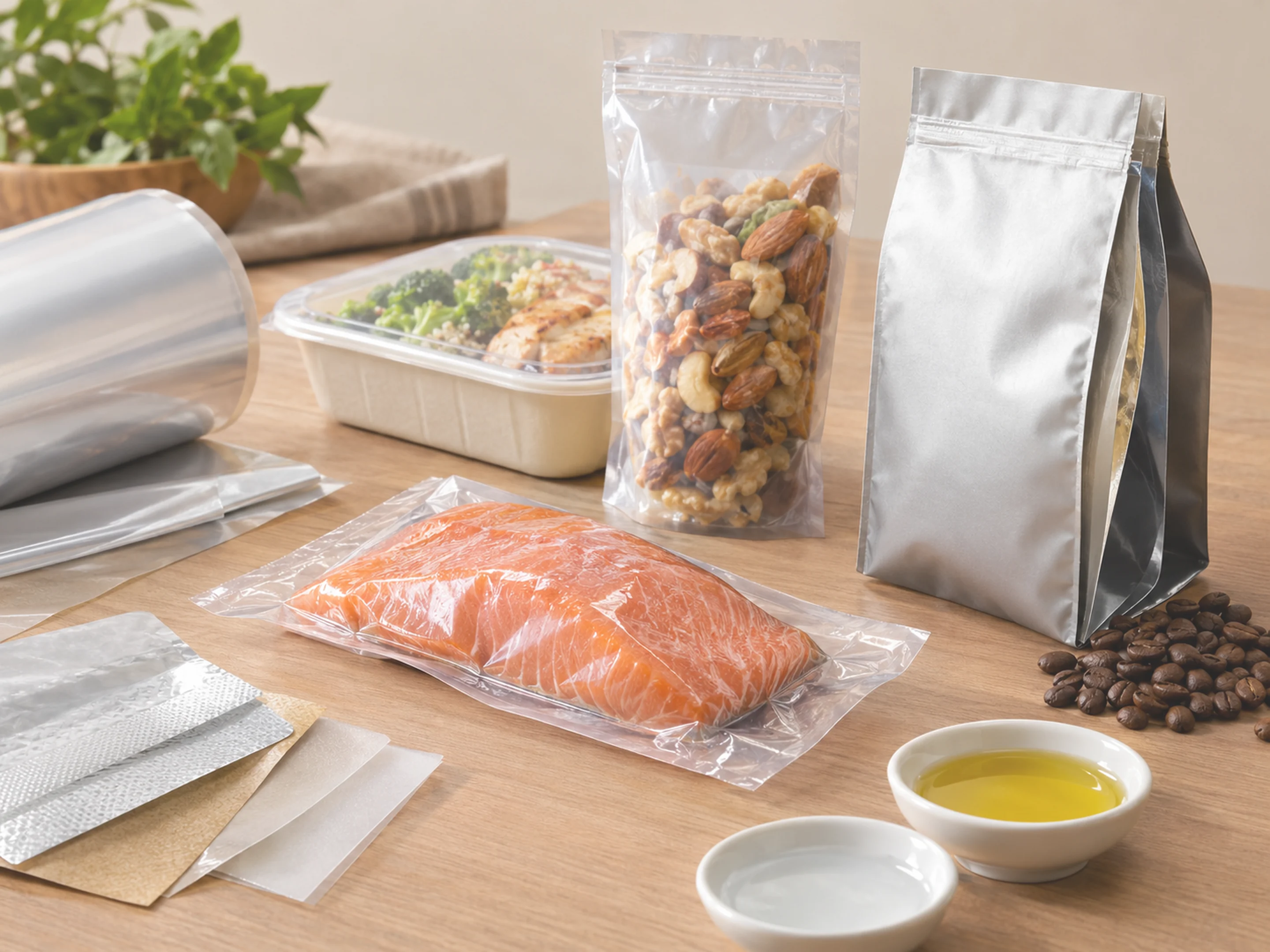
For potato chips, incoming moisture reduces crispness and oxygen can accelerate fat oxidation. Coffee presents aroma loss and odor ingress. Oily foods may swell a coating or find a path through a fold or seal. Multilayer structures assign different functions to different layers, but layer adhesion, processing defects and end-of-life handling become more complex.
A common mistake is equating a tight closure with good material barrier, or treating one transmission-rate report as a shelf-life result. Shelf life also depends on initial microbes, recipe, water activity, light, temperature and the atmosphere inside the pack. FDA’s food-type and condition framework helps define contact conditions, but it does not replace a food shelf-life study.
When inspecting a pack, first identify which molecule or exposure must be controlled. Then examine the layers, seals, folds and storage temperature. A product comparison should record appearance, crispness, odor and mass change, rather than relying on one number. References: