Preface
The question behind “Why Cups and Lids Are Designed as a System” looks like a choice of appearance or material, but packaging performance also depends on the food, geometry, time-temperature history and handling. This article explains the visible problem first, then the material and structural mechanism, and finally the limits of what can be inferred without a product-specific test.
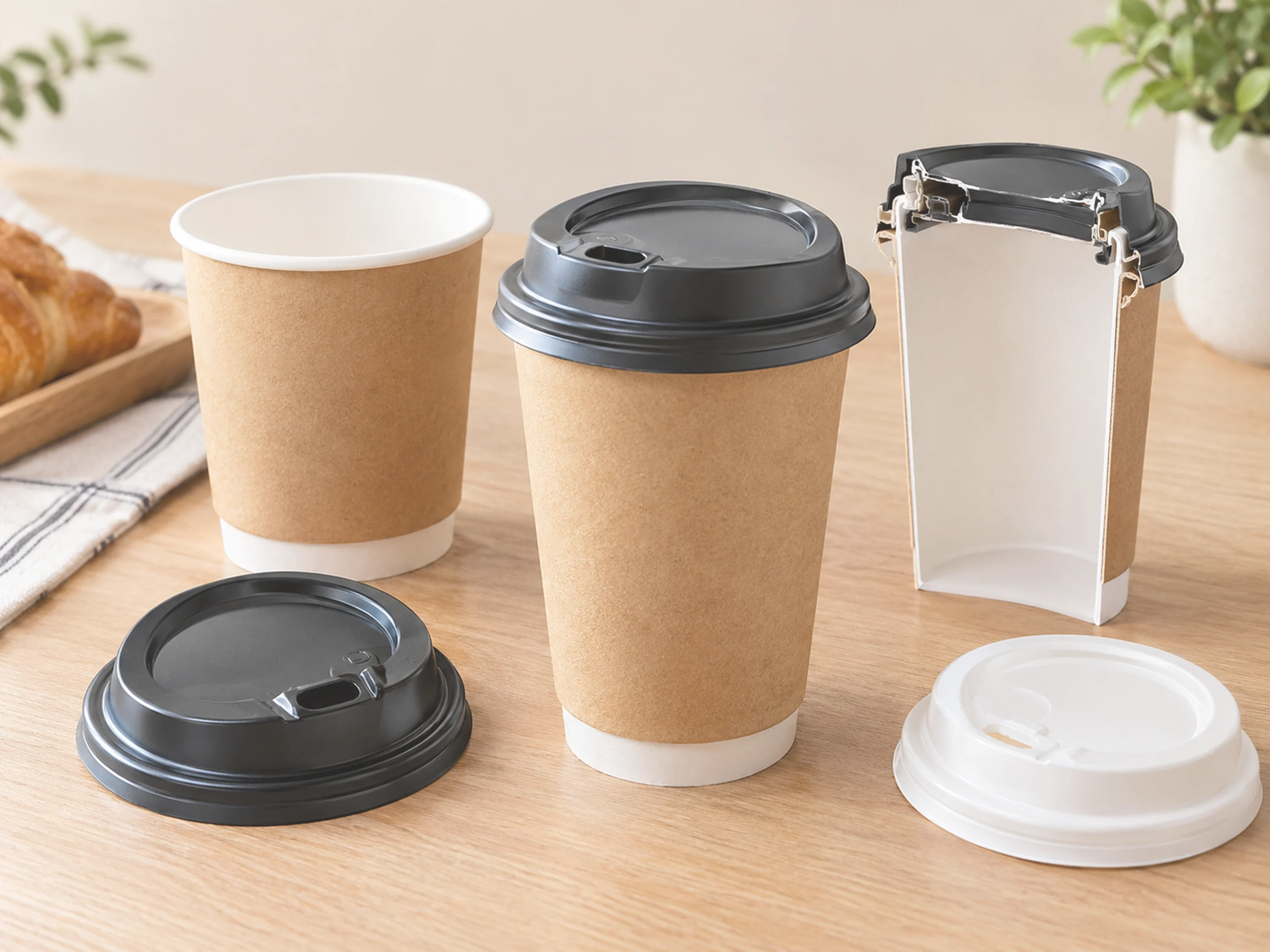
Two cups marked “90 mm” may still accept different lids. A nominal diameter is only one reference dimension. The rim radius, wall thickness, roundness, snap locations and permitted deflection determine the actual contact geometry. A lid may be retained by a continuous compression seal, discrete snaps or friction interference, and each mechanism produces a different opening force and spill risk.
Cup and lid therefore need a shared tolerance design. Injection-molded parts shrink during cooling, rolled paper rims vary with forming, and thin PET walls spring back. Designers must evaluate the tolerance range rather than one nominal dimension. A loose lid can release liquid during vibration; an overly tight lid can be difficult to open and may cause a hot drink to be spilled during service. Spill control comes from the sealing interface, retention force, drinking opening and liquid motion together.
Hot drinks also create vapor and temperature gradients. A sip opening, cross-cut or slider controls the drinking path and the rate at which liquid and vapor can move. Cold drinks create external condensation, which can reduce grip and weaken a paper sleeve. A dome lid with a straw port needs clearance around the inserted straw; an empty-cup check cannot establish leak performance with a filled drink.
A common mistake is treating “same diameter” as “same system,” or treating an upside-down bench check as a transport test. Use the intended beverage, fill level and temperature. Check standing, tilt, handoff, sealing or straw insertion, and record any lid lift or warpage. For a store, repeat the opening action because one successful sample does not represent a full service shift.
The limits matter: cold drinks, hot drinks and drinks containing pearls or fruit pieces have different flow behavior, so their lids should not be swapped by appearance. Food-contact compliance also depends on food type, contact time and temperature, rather than the resin name printed on a lid. References: