Preface
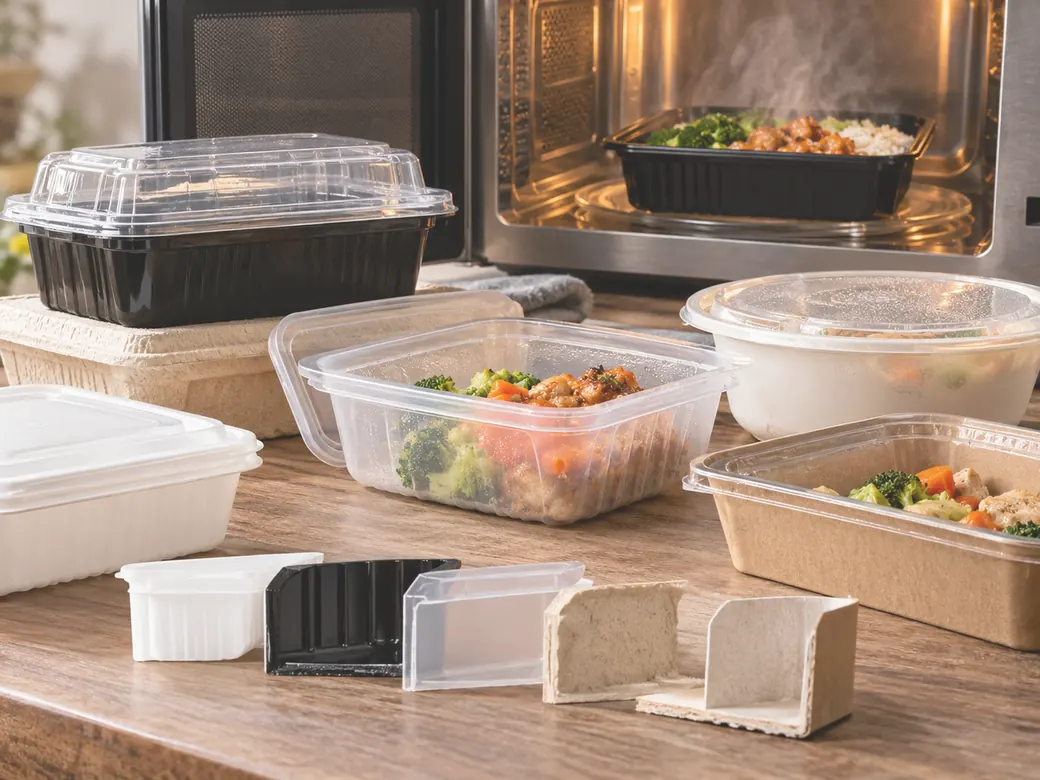
Prepared meals and home containers may move from freezer to microwave, but this is not a single temperature-number question. The article explains thermal shock, low-temperature brittleness and microwave hot spots.
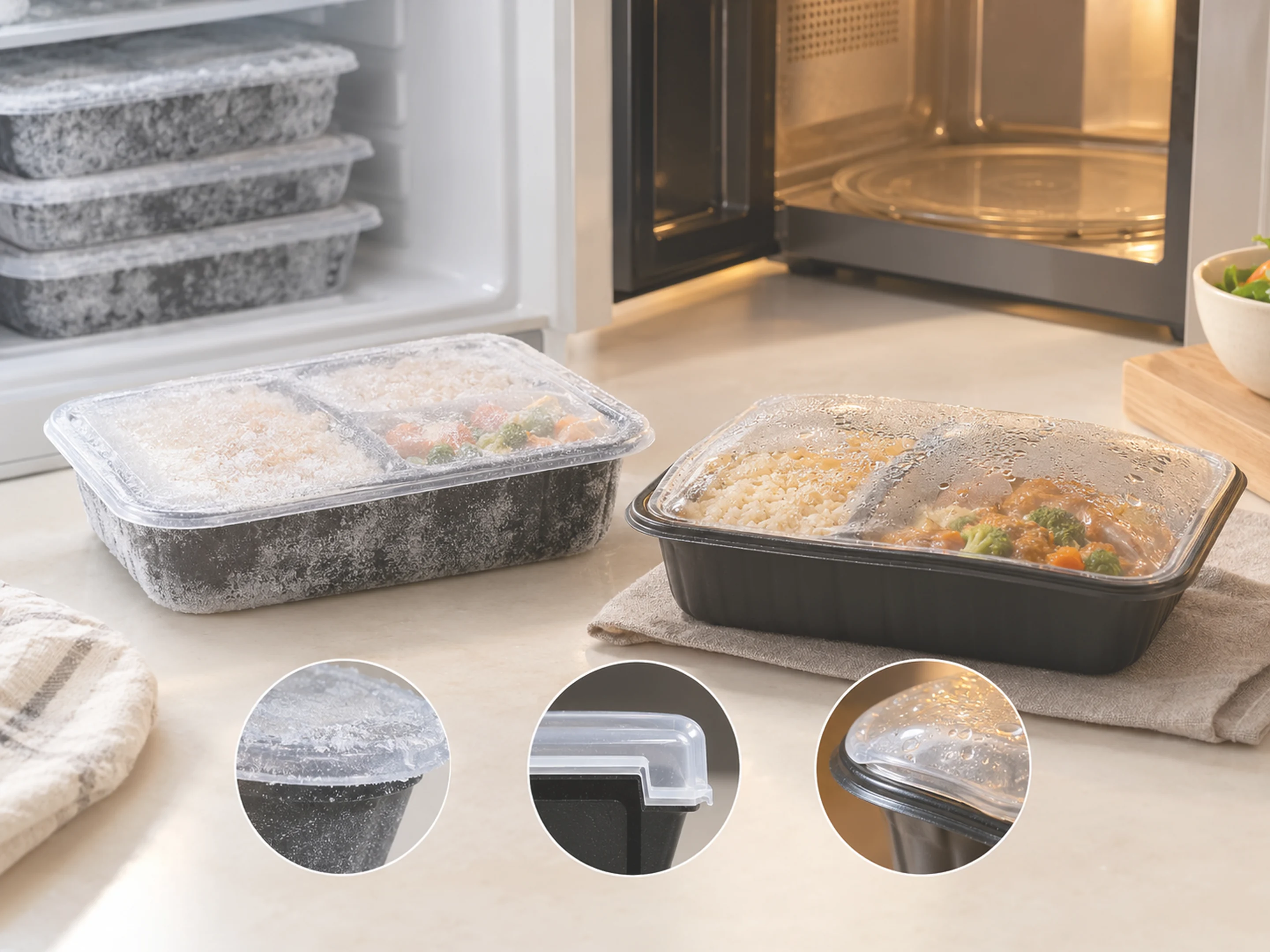
Freezing reduces chain mobility in some polymers, making a part harder and more brittle, especially at sharp corners, snaps and thin sections. Moving directly from a freezer to high-power reheating can create a rapid temperature gradient. One region expands before another, producing thermal stress. Different materials, thicknesses and colored areas may heat at different rates.
Microwave energy first heats the food, which then transfers heat to the pack. Moisture, salt, fat, fill quantity and geometry affect the distribution. Thick sauces and edges can be hotter than the center. A fully closed lid may build steam pressure, while a vented lid still has to be used in the specified position and time.
Freezer suitability focuses on low-temperature impact, seal retention and storage. Microwave suitability adds heat distortion, venting, hot spots and food-contact conditions. A pack that survives freezing may lose closure during reheating; a pack that shows no crack after one cycle may still be unsuitable for another food or power setting.
Record the complete sequence during validation: frozen storage, food mass, appliance power, time, lid position, stirring and standing time. Inspect the base, corners, snaps and lid for warpage, cracks and loss of sealing. Keep packaging performance separate from the question of whether the food itself was heated uniformly.
Shortcuts include pouring hot water over an empty container, using a resin code as a microwave instruction, and transferring one brand’s test result to every model. A defensible conclusion names the finished article, food, appliance and operating steps.
References: