Preface
The question behind “Is Lighter Packaging Always Better” looks like a choice of appearance or material, but packaging performance also depends on the food, geometry, time-temperature history and handling. This article explains the visible problem first, then the material and structural mechanism, and finally the limits of what can be inferred without a product-specific test.
Lightweighting commonly means reducing wall thickness, removing a component or changing material density. Lower mass can reduce raw-material and transport demand, but stiffness does not scale with thickness in a simple way. Base compression, side-wall buckling, edge warp and lid retention change with geometry. A lighter tray that collapses in a stack may increase leaks and food loss.
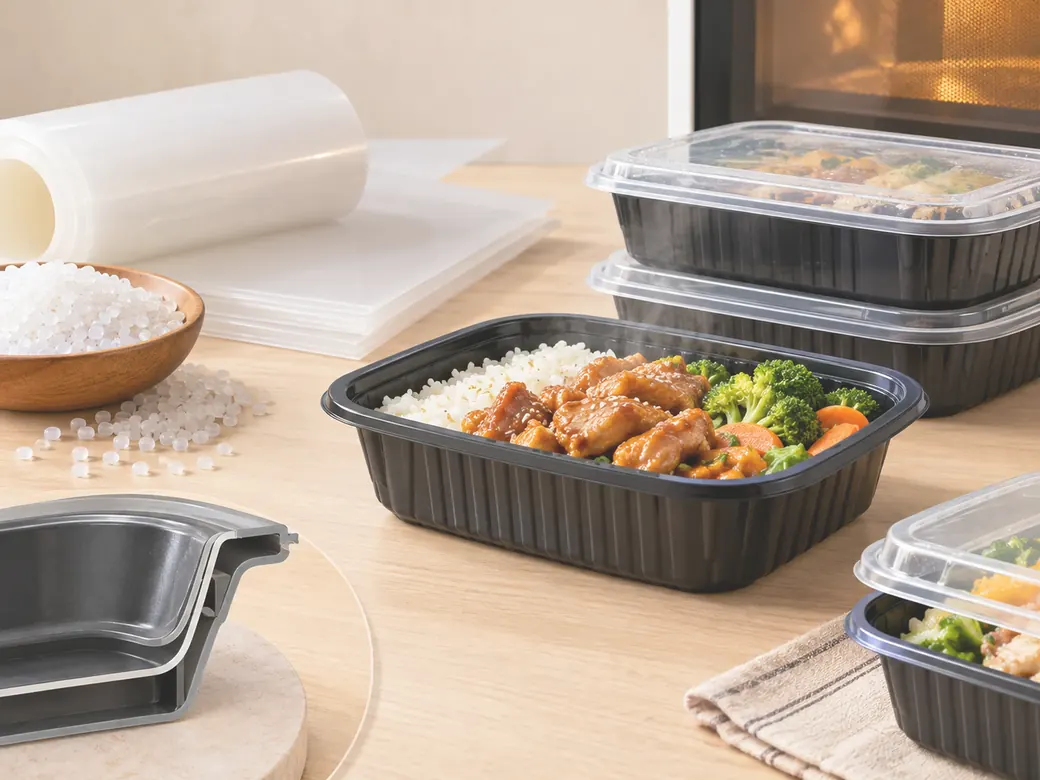
Ribs, radii, flanges and height can improve load efficiency without simply adding material. Radii reduce stress concentration, a flange adds local stiffness and a textured base can distribute load. These features also change usable volume, nesting and cleaning. Temperature dependence matters: the modulus of a thin part differs in chilled, ambient and hot-food conditions.
A common mistake is treating one gram-per-pack number as an environmental verdict, or equating reduction with sustainability. Packaging protects food through production, transport and sale, so the comparison should include pack mass, damage rate, discarded food and transport distance. EPA also notes that recovery depends on the local system, not mass alone.
Start a validation with the intended fill and stack height. Add storage temperature, vibration and tilt. Record bottom sag, lid release, corner cracking and food spill before deciding whether a thinner construction still performs its function. References: