Preface
The question behind “What Makes Paper Cups and Boxes Water-Resistant” looks like a choice of appearance or material, but packaging performance also depends on the food, geometry, time-temperature history and handling. This article explains the visible problem first, then the material and structural mechanism, and finally the limits of what can be inferred without a product-specific test.
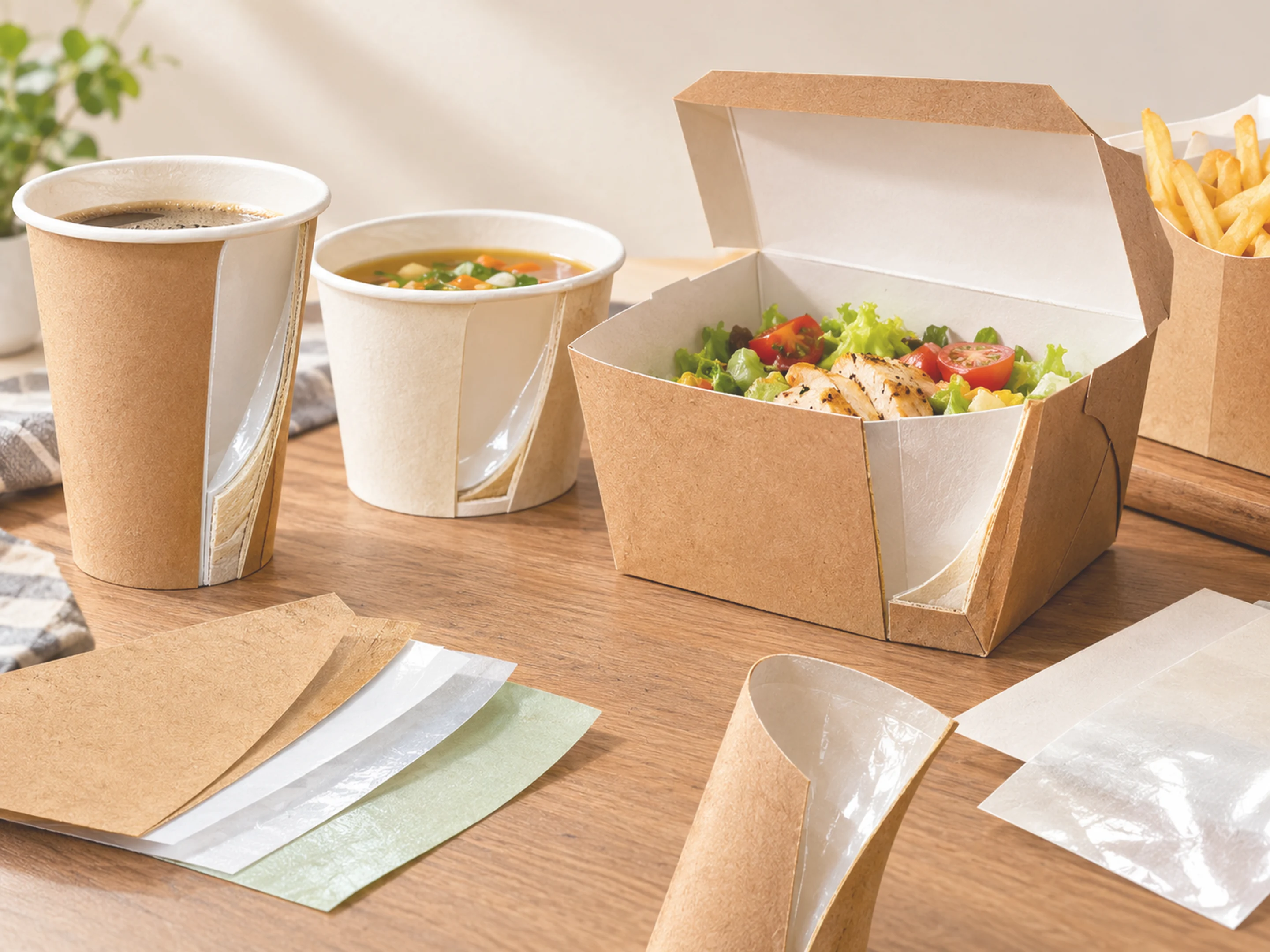
The inner layer of a paper cup is not simply a loose plastic film. Extrusion coating, dispersion coating or lamination bonds a continuous barrier to the paperboard. PE provides a common moisture barrier and heat-seal basis. PLA is a polymer made from lactic-acid chemistry and may enter a composting route under defined facilities and conditions. For both, film thickness, pinholes, edge sealing and adhesion matter.
The liner controls more than leakage. Hot drinks create a temperature gradient, and different expansion between paper and coating can affect the rim and bottom seam. Greasy and acidic foods change the contact conditions. A composite that is difficult to separate may rely on specialized equipment for recovery. A compostable label applies to the complete product and the receiving facility; a PLA liner alone does not prove that a cup belongs in a home compost bin.
Inspect the rolled rim, bottom seam, liner continuity and paperboard softening after use. Test hot drinks, cold drinks, soups and oily foods with the real fill, tilt and storage time. A short clean-water check cannot stand in for the intended food. EPA explains that compostable plastics are generally designed for industrial or commercial facilities, so the local system determines the practical route.
References: