Preface
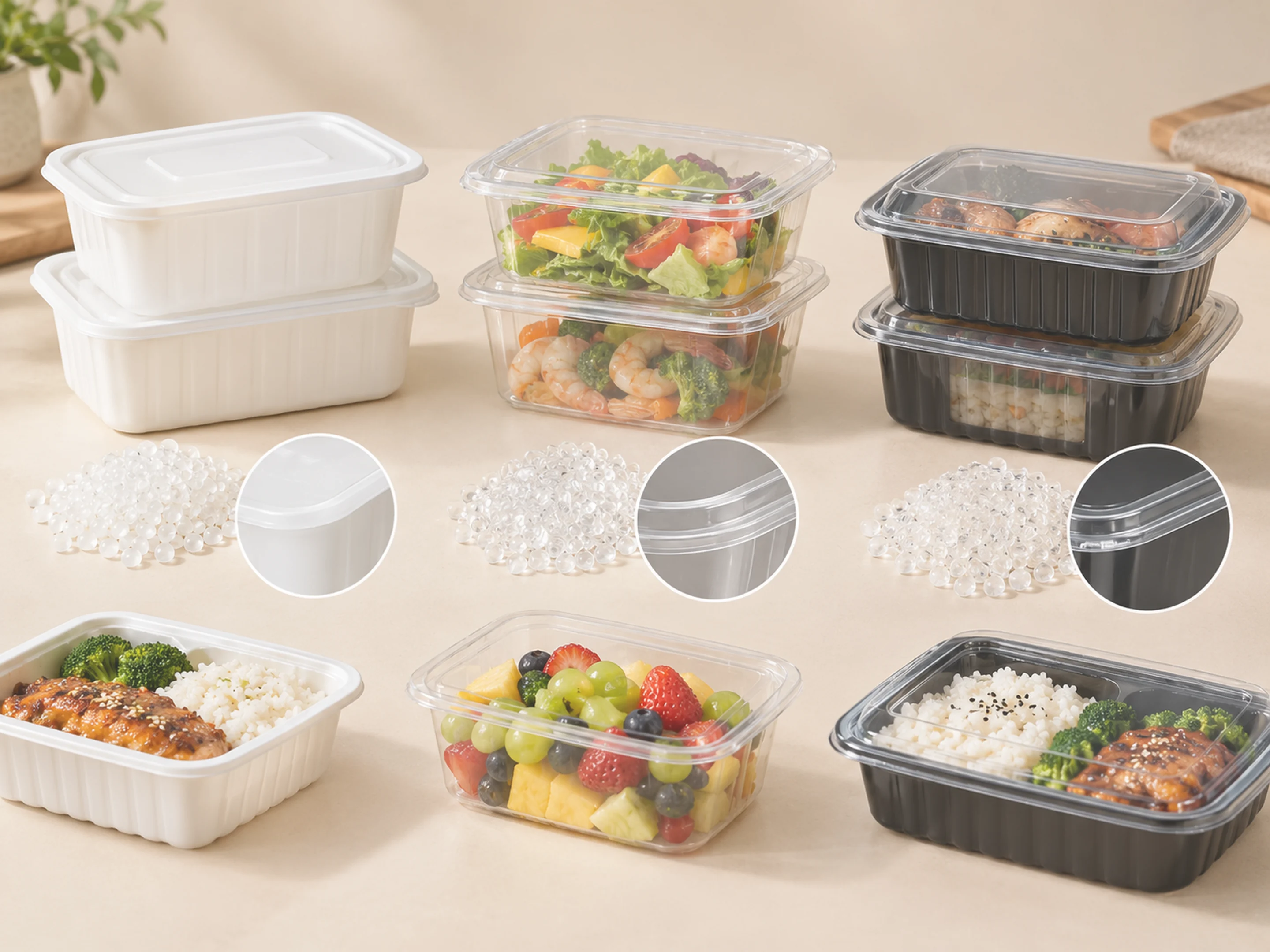
Rigid food packs made from PS, PP and PET can look similar on a shelf but respond differently to bending, impact and heat. This article connects those observations to polymer structure and intended conditions.
People often use “hard,” “clear” and “heat resistant” as if they described one property. Stiffness is resistance to bending; toughness describes how a part responds to impact before cracking; clarity depends on light scattering and processing. A package can be strong in one of these dimensions and limited in another.
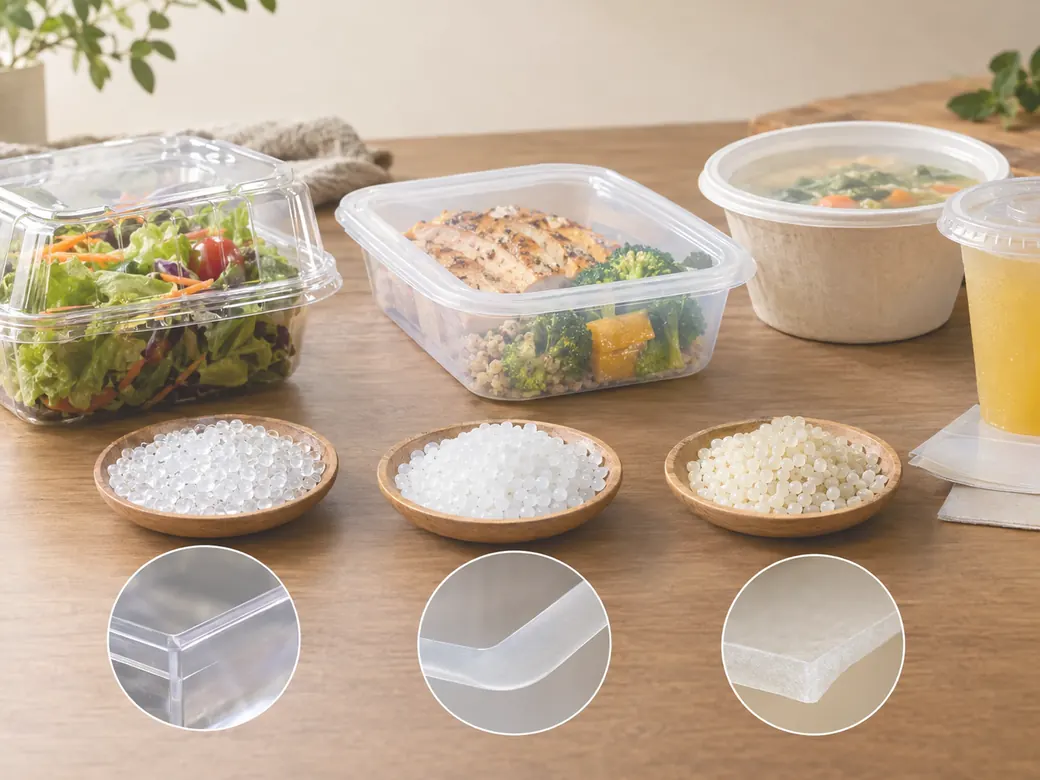
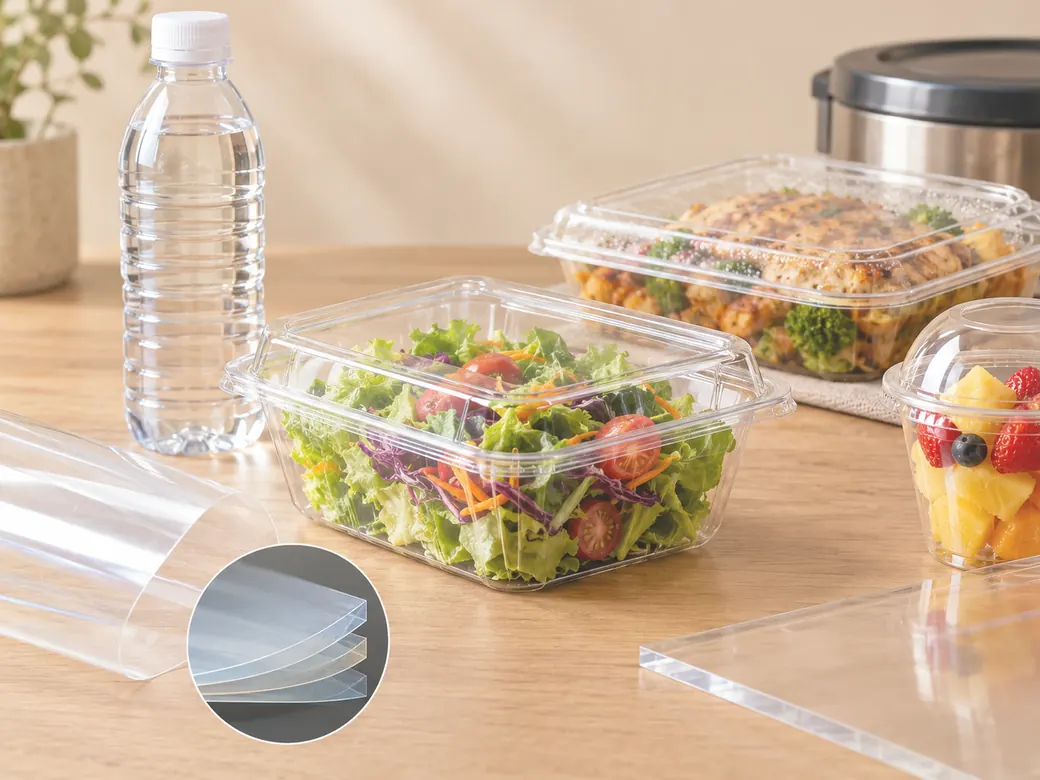
PS, or polystyrene, has relatively rigid chain segments. Solid PS can make a crisp clear or translucent part, yet sharp corners, low temperatures and impact can promote brittle cracking. Foamed PS has a different density and cellular structure, so its behavior should not be used to describe every PS container. PP is semicrystalline. Ordered regions help retain shape, while the mobile portions of the chain can provide useful impact tolerance. Its appearance may be translucent or hazy. PET is widely used for chilled packs that need clarity and dimensional stability; crystallinity, orientation, wall thickness and cooling determine the finished optical result.
Manufacturing changes the result further. Thermoformed sheet can become thin at highly stretched corners. Injection-molded parts can contain stress around gates, weld lines and snap features. A container that feels thick at the rim can still crack at a thinned corner. Conversely, a clear PET tray may be stiff without being suitable for hot food or microwave reheating.
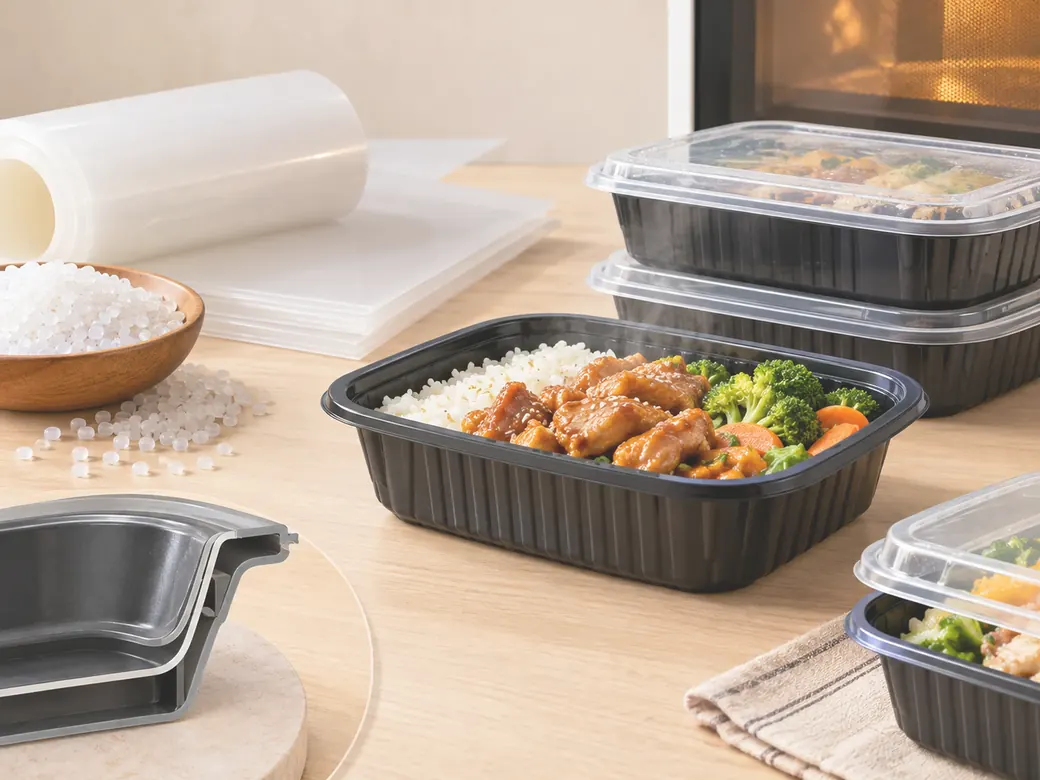
Start with the actual food and handling conditions. A chilled salad pack may prioritize display, impact behavior and condensation. A hot rice container needs shape retention, closure performance and load capacity. A stack shipped through a distribution route also needs resistance to buckling. The resin family narrows the options; it does not replace finished-pack testing.
A common mistake is to infer microwave suitability from a resin code or to treat clarity as a safety rating. Identification codes describe a resin family. Food-contact suitability and reheating instructions depend on the finished article, formulation, food type, conditions and market documentation. A useful comparison records fill weight, closure retention, cold impact, flex recovery and post-heat distortion while keeping thickness and process history with the sample.
References: