Preface
“Recycled PET” describes a feedstock history, not a complete food-contact conclusion. Source control and decontamination have to be considered together.
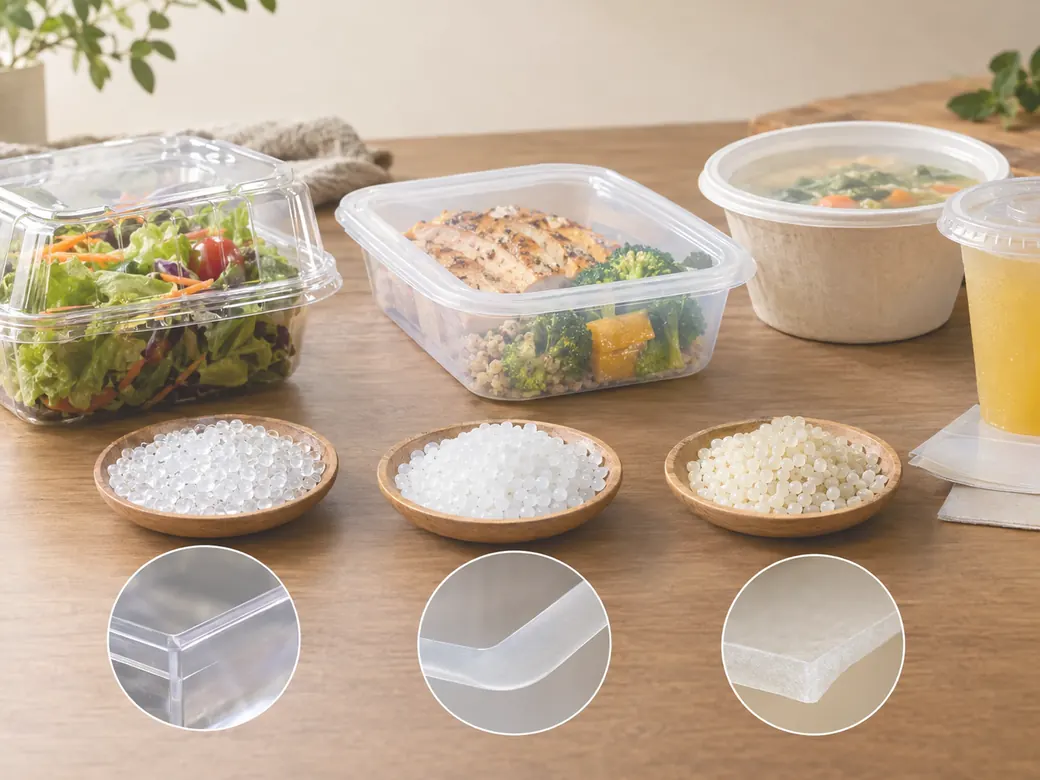
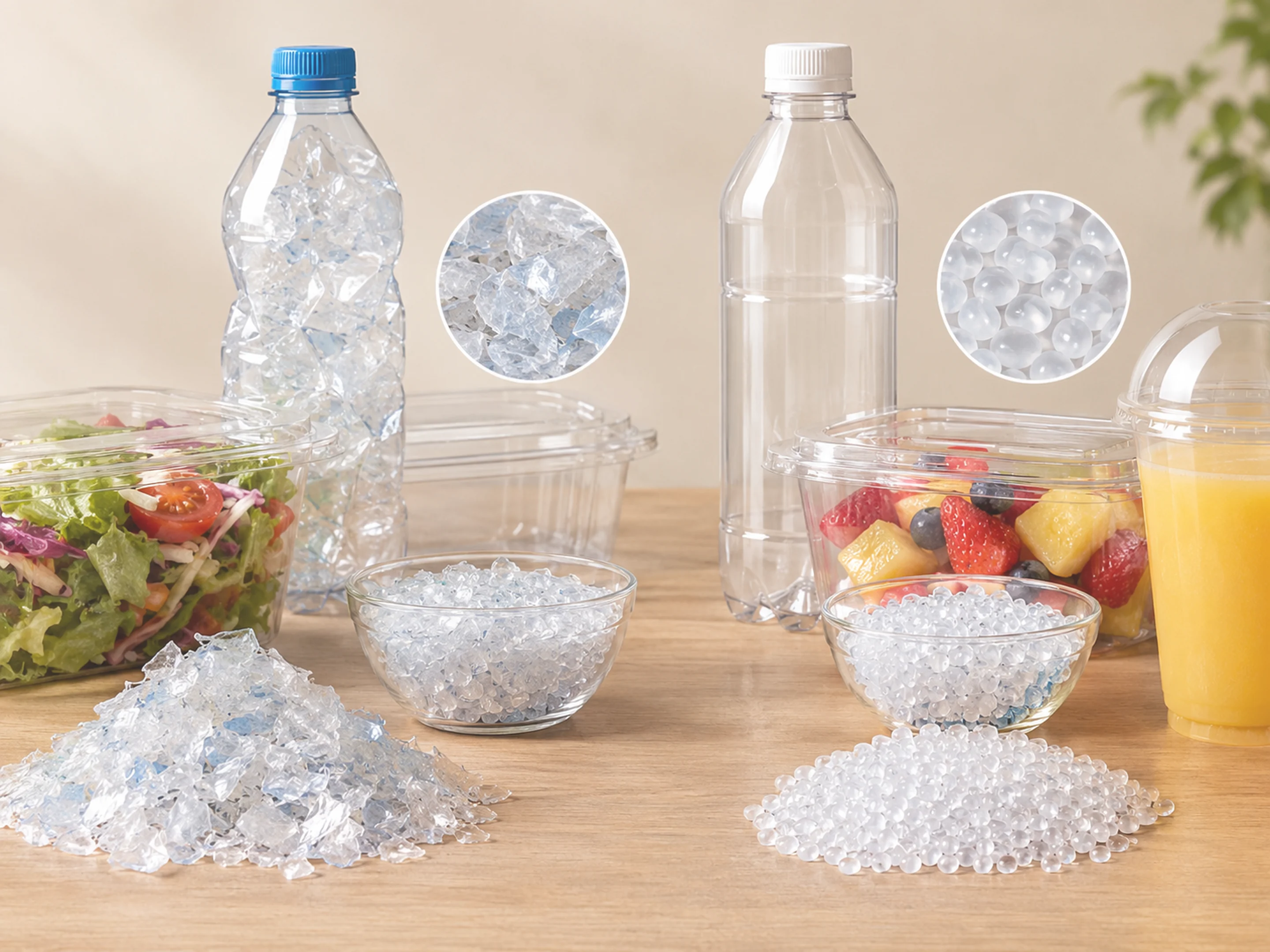
Virgin PET is made from polymer feedstock that has not gone through a consumer recycling stream. rPET may come from post-consumer bottles, industrial scrap or a mixture of sources. Those streams can differ in contaminants, color, additives and molecular weight. Food-contact use therefore depends on traceable input, sorting, washing, decontamination and the intended process, not on the resin name alone.
Decontamination is more than washing once. A recycling process may include sorting, grinding, washing, drying, melting and pelletizing. A food-contact process adds controlled inputs, defined process conditions and validation. Temperature, vacuum, residence time, equipment condition and contaminant type affect removal. A recycled-content percentage cannot transfer the performance of one feedstock or process to another.
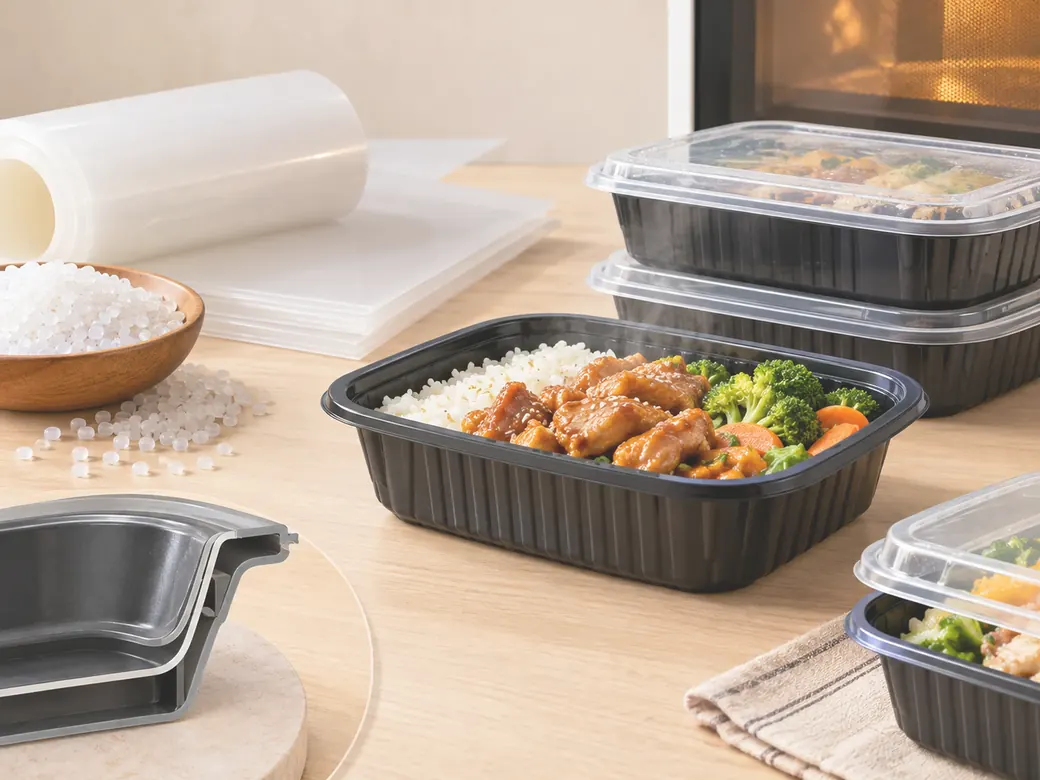
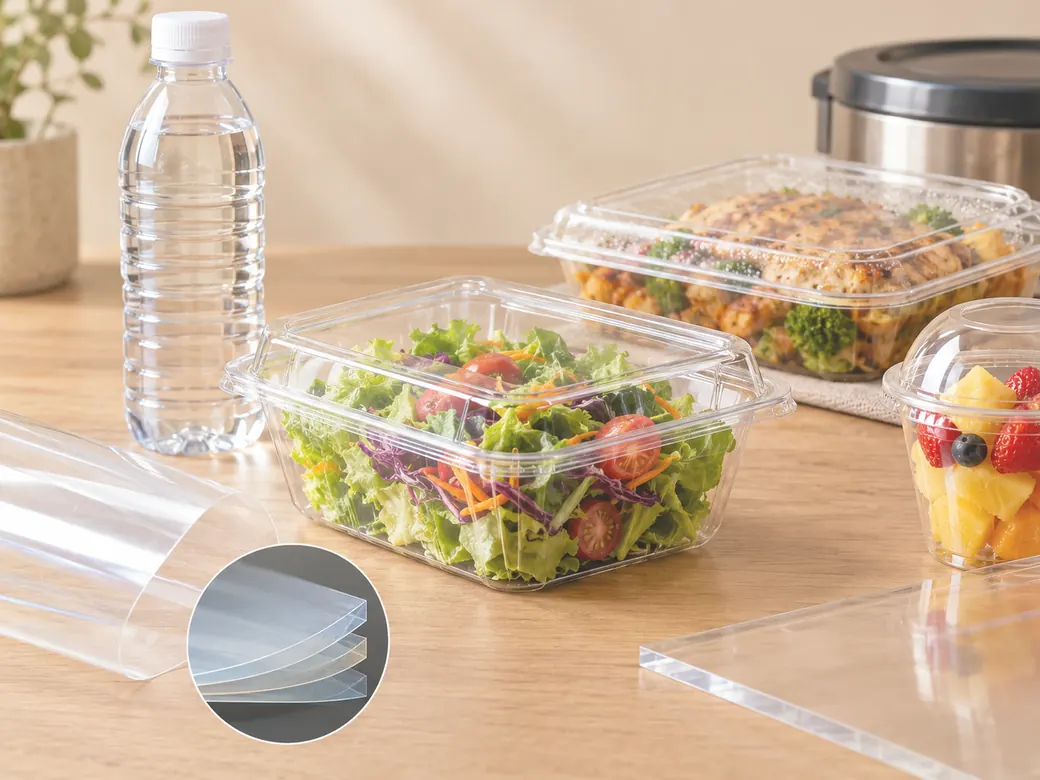
The finished structure matters too. rPET can be used in a bottle, tray, fiber or non-contact layer. A multilayer design may place recycled material behind a functional barrier, but edges, seals and the barrier itself still need assessment. Color, clarity and impact behavior may differ from virgin PET, requiring adjusted forming temperatures and sheet thickness.
Consumers sometimes equate recycled with natural or biodegradable. rPET remains PET and normally follows a plastics recycling route; it does not disappear simply because its feedstock was recovered. Environmental value also depends on collection, recycling yield, weight, reuse and local treatment.
When reading documentation, confirm source control, recycling process, contact layer, test food, temperature and applicable market rules. A recycled-content number or generic test report is not a complete conclusion.
References: