Preface
Removing air or replacing it with another gas changes oxidation and respiration, but it does not sterilize food. This article separates vacuum, modified atmosphere and cold-chain control.
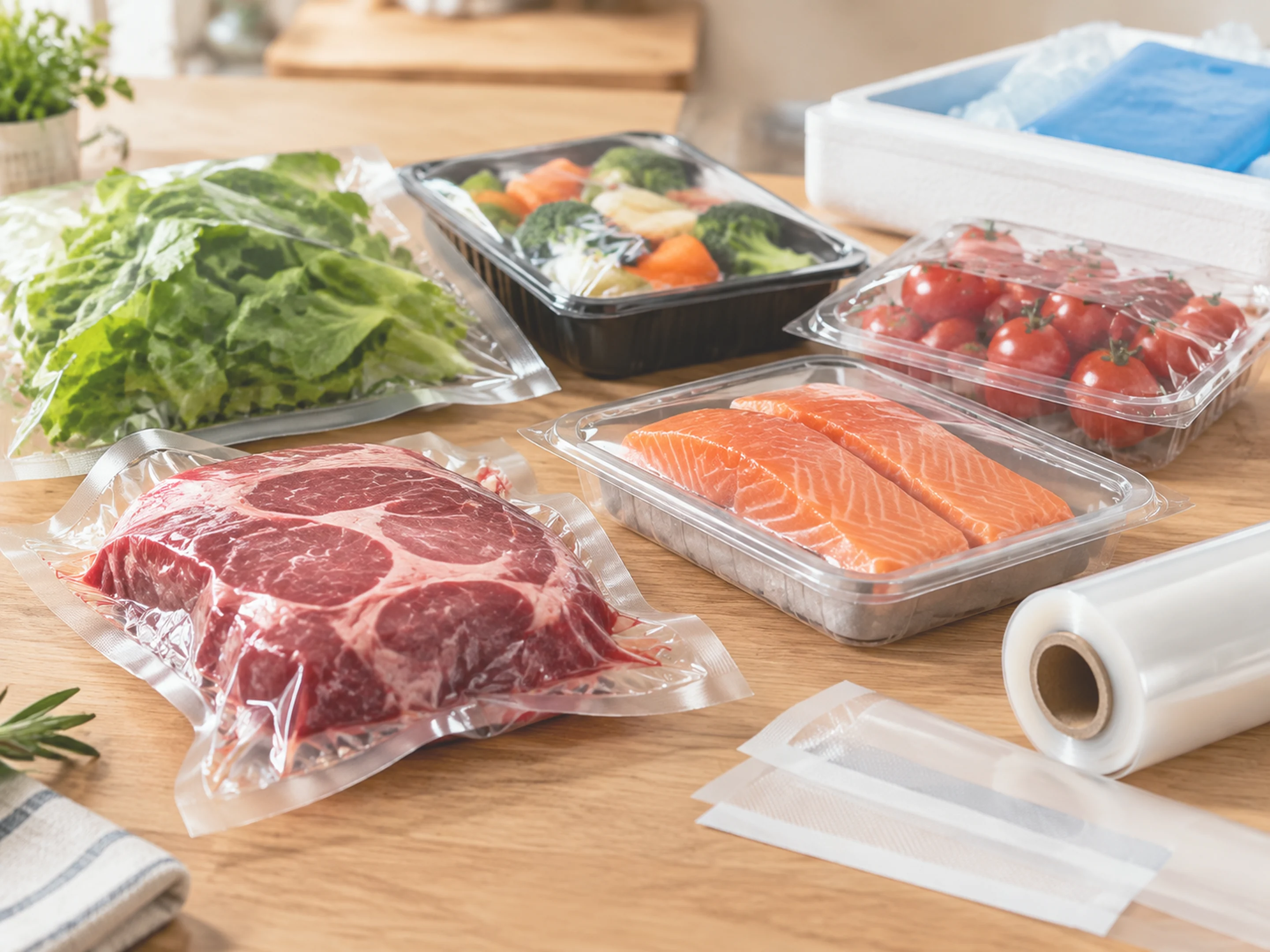
Vacuum packaging lowers the amount of gas in the pack, including oxygen and headspace. Modified-atmosphere packaging replaces the gas with a selected mixture, which may include carbon dioxide, nitrogen or oxygen. The ratio depends on respiration, oxidation, color and the permeability of the package.
Fresh produce continues to respire. Oxygen is consumed and carbon dioxide increases; if the film is too restrictive or the gas mix is wrong, the result can be off-odors or quality loss. Meat color also responds to oxygen, and low oxygen does not automatically produce a better appearance. Vacuum can compress soft foods and change shape or juice distribution.
Film and seals are part of the gas-control system. Oxygen transmission, moisture barrier, heat-seal strength and pinholes change the atmosphere. Cold-chain temperature swings matter as well; warmer conditions can accelerate microbial growth and gas change. A low-oxygen pack does not replace hygiene, thermal processing or refrigeration.
Validation should measure internal gas, seal leakage, food temperature and relevant sensory or microbiological indicators. A tight-looking bag is not enough. Swelling can come from food gas or temperature rise, while a collapsed pack does not prove safety. Each food needs its own gas, sealing and storage program.
Common mistakes are equating vacuum with sterility, treating one gas recipe as universal and ignoring the time-temperature period after opening. The use boundary should name food category, film, refrigeration range, shelf-life evidence and post-opening handling.
References: